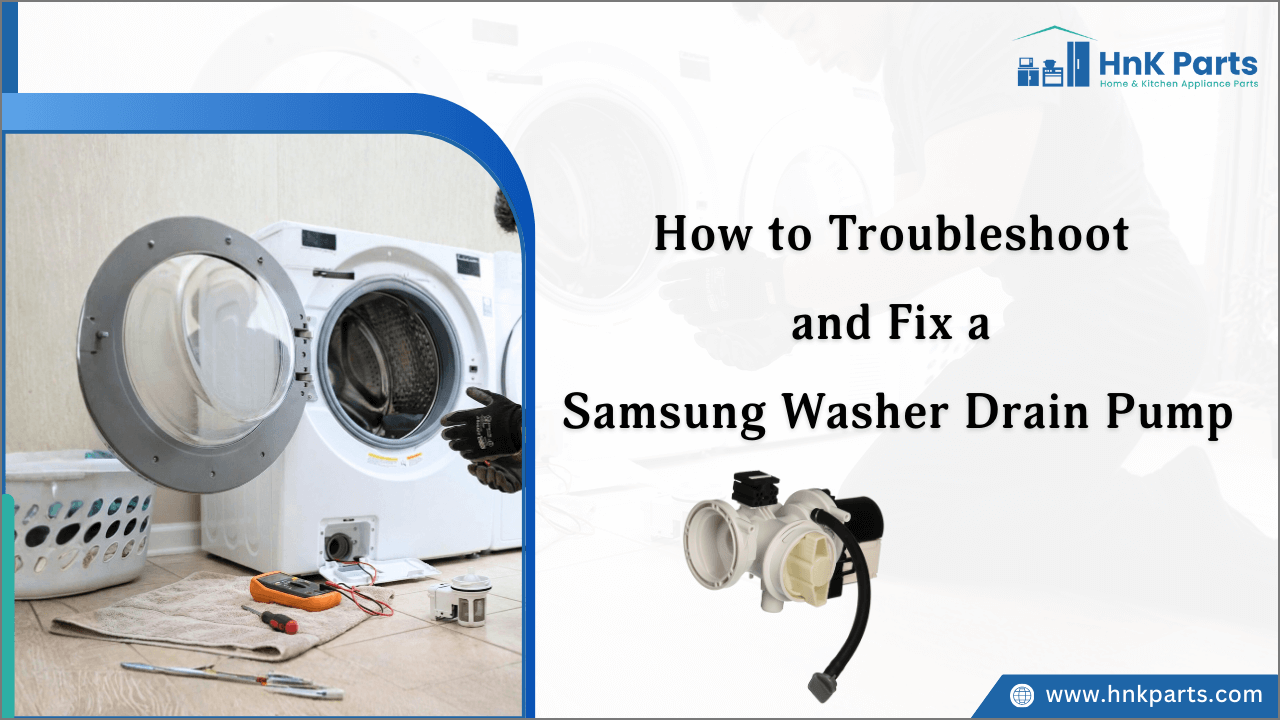
How to Troubleshoot and Fix a Samsung Washer Drain Pump
A washing machine that won’t drain can quickly disrupt your laundry routine, leaving clothes soaked and triggering frustrating error codes. One of the most common causes of this problem is the Samsung washer drain pump, a vital component that removes used water from the tub. When the pump fails, proper drainage stops.
This guide explains how to troubleshoot the Samsung washer drain pump, recognize common issues, and carry out effective Samsung washer drain pump repair or replacement, whether you’re a DIY homeowner or a technician handling Samsung washing machine parts.
Understanding How the Samsung Washer Drain Pump Works
The Samsung washing machine drain pump is essential for completing wash and spin cycles. As an electrically powered motor, it activates during the drain phase to move used water from the tub through the drain hose. If the pump fails, the washer cannot drain properly, leading to standing water and incomplete cycles.
Several key mechanisms explain how the Samsung washer drain pump operates:
-
Control Board Activation and Power Delivery: When the washer enters the drain stage, the control board sends voltage to the washing machine drain pump, initiating its operation in sync with the wash cycle.
-
Impeller Rotation and Water Suction: Inside the pump housing, a high-speed impeller rotates to create suction. This action pulls water from the washer tub and pushes it efficiently through the drain hose.
-
Compact High-RPM Design for Debris Handling: Samsung washers use compact, high-RPM pumps designed to handle lint, detergent residue, and small debris while maintaining efficient and quiet drainage.
-
Exposure to Wear, Blockages, and Electrical Stress: Because the pump continuously handles dirty water, it is prone to wear and clogging. A Samsung washer drain pump clogged with debris can restrict impeller movement, reduce suction, and eventually lead to mechanical or electrical failure.
Together, these functions explain why drain pump failures are a common cause of Samsung washer drainage problems and why understanding pump operation is critical for accurate troubleshooting and repair.
Looking for reliable home and kitchen repair parts you can trust? Shop at HnK Parts for high-quality home and kitchen replacement parts built for performance and long-term reliability. We offer a wide selection of parts for washers, dryers, refrigerators, ovens, and other major home appliances—carefully sourced to ensure proper fit and durability. With competitive pricing, fast shipping, and knowledgeable support, HnK Parts makes appliance repairs simple and dependable.
Common Signs of a Faulty Samsung Washer Drain Pump
Drainage issues can stem from multiple washer components, so confirming the drain pump as the source of failure is essential before disassembly. Certain warning signs clearly indicate Samsung washer drain pump problems rather than issues with the drain hose, control board, or sensors.
Several key indicators point to a failing Samsung washer drain pump include:
-
Standing Water After a Wash Cycle: Water left in the drum after a completed wash cycle often means the drain pump is not removing water efficiently before spinning.
-
Unusual Noises During Drainage: Grinding, buzzing, or humming sounds during the drain phase typically signal a damaged impeller or debris lodged inside the pump housing.
-
Drain-Related Error Codes and Cycle Interruptions: Samsung washers may display drainage error codes or stop mid-cycle when the pump cannot evacuate water within the required time.
-
Intermittent Draining and Overheating Symptoms: Inconsistent drainage can indicate early pump failure. When the Samsung washer drain pump repair is delayed, the motor may overheat or partially seize, causing intermittent operation.
Together, these symptoms help identify drain pump failure early, preventing damage to other Samsung wash machine parts and reducing the likelihood of costly repairs.
Check out common washing machine issues and how to solve them, which covers frequent problems, their causes, step-by-step troubleshooting tips, and practical fixes to restore proper washing performance.
Steps on How to Troubleshoot the Drain Pump in Samsung Washers
Effective Samsung washer drain pump troubleshooting requires a methodical process to accurately identify the root cause of drainage failure. Because multiple components influence water removal, following a structured inspection sequence helps isolate the drain pump from other possible issues. Before beginning, the washer should always be unplugged and the water supply shut off to ensure safe access.
|
Step No. |
What to Check |
How to Perform the Check |
Expected Result |
|
1 |
Drain filter |
Open the lower front access panel, place a towel underneath, and slowly remove the drain filter cap to clear lint, coins, buttons, or detergent buildup |
The filter is clean, and water drains freely without obstruction |
|
2 |
Drain hose |
Disconnect the drain hose from the washer and plumbing outlet, then visually inspect and flush with water to remove any internal blockages |
Hoses allow water to flow smoothly with no kinks or clogs |
|
3 |
Pump impeller |
Access the drain pump housing and gently rotate the impeller by hand to check for resistance or trapped debris |
The impeller spins smoothly without sticking or grinding |
|
4 |
Pump wiring |
Inspect the wiring harness connected to the drain pump for loose plugs, corrosion, or damaged insulation |
The electrical connection is tight, clean, and undamaged |
|
5 |
Pump motor continuity |
Use a multimeter set to resistance (ohms) and test the drain pump motor terminals |
Reading falls within the manufacturer’s specified resistance range |
|
6 |
Pump housing |
Examine the pump body and surrounding area for cracks, moisture, or signs of leaking during operation |
The pump housing is intact with no visible leaks or damage |
| Caution: Always unplug the washing machine and shut off the water supply before performing any troubleshooting steps. Residual water may be present inside the pump and hoses. Use proper safety precautions when handling electrical connections or rotating components. If you are unsure or uncomfortable performing these checks, contact a qualified appliance technician. |
Explore Samsung washing machine parts troubleshooting: here's how to fix, which explains common component failures, diagnostic steps, and practical repair solutions to restore optimal washing performance.
How to Fix or Replace a Samsung Washer Drain Pump
Once troubleshooting confirms a drain pump failure, the next step is determining whether repair or full replacement is required. Some drain pump issues are minor and can be resolved without replacing the unit, while others indicate complete mechanical or electrical failure that demands a drain pump replacement.

| Disclaimer: This infographic is intended for general informational purposes only. Appliance designs and repair procedures may vary by Samsung washer model. Always consult your appliance’s service manual or a qualified technician before attempting repairs. The publisher is not responsible for damage, injury, or improper repairs resulting from the use of this information. |
Summary: Preventing Future Drain Pump Problems
Drain pump problems often result from poor maintenance. Cleaning the drain filter, checking pockets, and using the right detergent help prevent a Samsung washer drain pump from clogging with debris.
Avoiding overloads and regularly inspecting hoses and Samsung wash machine parts reduces strain and extends the life of the washing machine drain pump.
Key Takeaways
-
Regular drain filter cleaning prevents common drain pump blockages
-
Proper loading reduces stress on the pump motor during drain cycles
-
Routine inspections help protect the surrounding Samsung washing machine parts
-
Correct troubleshooting minimizes unnecessary part replacements
-
Preventive maintenance extends the life of the washing machine drain pump
By understanding how the washing machine drain pump operates and applying consistent maintenance practices, you can ensure reliable Samsung washer performance and avoid recurring drainage problems for years to come.
FAQs
How to fix drainage issues on a Samsung washing machine?
Start by cleaning the drain filter, inspecting the drain hose for blockages, and performing Samsung washer drain pump troubleshooting to confirm whether the pump is functioning correctly.
Can you force-drain a Samsung washer?
Yes, many Samsung washers allow a manual drain or spin-only cycle through the control panel, which can help remove standing water before repairs.
How to reset a Samsung washing machine not draining?
Unplug the washer for 5–10 minutes to reset the control board, then restart a drain or spin cycle to check if the issue persists.
How do I get my Samsung washer to just drain and spin?
Select the spin-only or drain-and-spin setting on the control panel, ensuring no error codes are active before starting the cycle.
How to remove the drain pump from a Samsung washing machine?
Disconnect power, access the pump from the bottom or rear panel, detach hoses and wiring, then carefully remove the mounting screws to release the pump assembly.
-
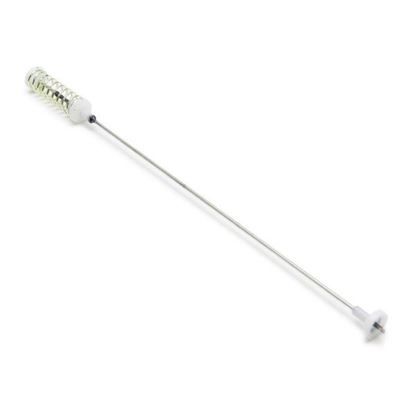 Samsung DC97-16350C Washer Suspension Rod And Spring AssemblySpecial Price $65.75 Regular Price $81.40
 -
 Samsung DG94-00541A Range Electrode AssemblySpecial Price $47.84 Regular Price $61.95
 -
 Samsung DG94-00222B Range Oven Door Handle WhiteSpecial Price $104.45 Regular Price $151.09
 -
 Samsung DA92-00384K Refrigerator Electronic Control BoardSpecial Price $68.86 Regular Price $83.95
 -
 Samsung DC97-16040P Dryer Back Drum AssemblySpecial Price $295.20 Regular Price $353.24