
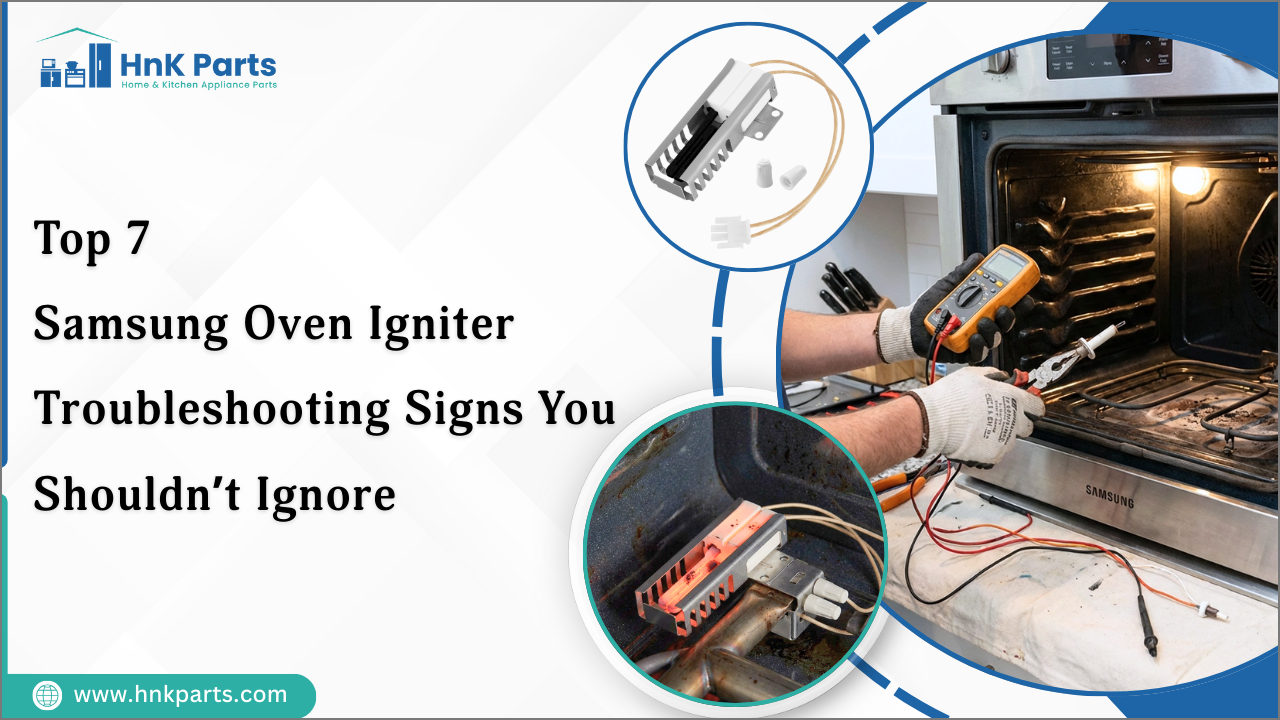
Top 7 Samsung Oven Igniter Troubleshooting Signs You Shouldn’t Ignore
Modern gas ovens rely on a properly functioning igniter to deliver consistent, efficient cooking. In a Samsung gas oven, the igniter controls safe gas flow and burner ignition, making it essential for reliable performance. Unfortunately, igniter-related failures are a leading cause of oven ignition problems and often begin with subtle warning signs.
This guide explains how the igniter works, outlines the top Samsung oven igniter troubleshooting signs, and covers common causes, repair options, and prevention tips to help you make informed maintenance or replacement decisions.
Understanding the Role of the Igniter in Samsung Ovens
A Samsung oven igniter is a safety-critical electrical component designed to ignite the gas burner reliably and safely during oven operation. Proper igniter performance is essential for consistent heating, accurate temperatures, and safe gas control. Below is a clear, structured breakdown of how the system works:
-
Electrical Activation of the Igniter: When you set a Samsung gas oven to bake or broil, electrical power flows to the igniter. This current causes the igniter to heat rapidly, preparing it to initiate the ignition process.
-
Heat-Driven Gas Valve Activation: As the igniter reaches a high temperature, it draws sufficient electrical current to signal the gas valve to open. This step ensures gas is released only when ignition conditions are safe and controlled.
-
Gas Ignition and Flame Stabilization: Once gas flows through the burner, the hot igniter ignites it immediately, producing a steady, controlled flame that heats the oven evenly and efficiently.
-
Igniter-Dependent Safety System: Unlike older pilot-light designs, Samsung gas ovens rely entirely on the igniter for safe ignition. If the igniter weakens or fails, the gas valve may not open fully—or may not open at all—leading to uneven heating or complete ignition failure.
Core Functions of a Samsung Oven Igniter:
-
Initiates burner ignition
-
Regulates safe gas flow
-
Maintains stable oven temperatures
-
Prevents raw gas buildup inside the oven cavity
Continuous Thermal Stress and Wear: Because the igniter operates under extreme heat during every cooking cycle, gradual wear is unavoidable. Over time, this thermal stress can reduce performance, explaining why oven ignition problems eventually develop with regular use.
Understanding how a Samsung oven igniter works provides a strong foundation for recognizing early warning signs, diagnosing ignition issues accurately, and determining when repair or replacement is necessary to maintain safe, reliable oven operation.
Looking for reliable home and kitchen repair parts you can trust? Shop at HnK Parts for high-quality home appliance repair parts designed for dependable performance and long-term durability. We offer a wide selection of parts for refrigerators, ovens, washers, dryers, and other major home appliances—carefully sourced to ensure proper fit and consistent operation. With competitive pricing, fast shipping, and knowledgeable customer support, HnK Parts makes appliance repairs simple, efficient, and worry-free.
Top 7 Samsung Oven Igniter Troubleshooting Signs You Shouldn’t Ignore
Below are the most common warning signs that indicate developing or active Samsung oven igniter issues.
1. The oven fails to heat at all: When the oven does not heat, the igniter is often not drawing enough electrical current to open the gas valve. Without gas flow, the oven produces no heat, making cooking impossible. Testing the igniter’s amperage is recommended, and a Samsung oven igniter replacement may be required if the igniter is weak.
2. Delayed ignition or long preheat times: A partially failing igniter may take longer to heat up, causing delayed ignition and extended preheating. This can result in uneven cooking and increased strain on other oven components. Replacing the igniter early helps prevent complete ignition failure.
3. The igniter glows, but the burner won’t light: Even if the igniter glows, it may not be drawing sufficient amperage to fully open the gas valve. This leads to no flame despite visible glow. Electrical testing can confirm the issue, and replacement is advised if readings are below specification.
4. Inconsistent oven temperatures: A weak igniter can cause unstable gas flow, leading to fluctuating oven temperatures. This results in undercooked or overcooked food. Inspecting the igniter condition and monitoring burner flame stability can help identify the problem.
5. Clicking sounds without ignition: Repeated clicking without successful ignition indicates a failed ignition sequence or delayed gas ignition. This can cause repeated ignition attempts and potential gas buildup. Stop using the oven and inspect the igniter and gas valve immediately.
6. Gas smell without flame: If gas is released without ignition, it creates a serious safety hazard. In this situation, the oven should be shut off immediately, the area ventilated, and the igniter replaced before further use.
7. The igniter keeps failing repeatedly: Repeated igniter failures often point to electrical issues, improper installation, or incompatible oven parts. This leads to frequent breakdowns and a shortened appliance lifespan. Inspecting the wiring, power supply and installing the correct OEM igniter is essential.
| Caution: If you smell gas, hear repeated clicking, or experience delayed ignition, stop using the oven immediately. Turn off the gas, ventilate the area, and do not attempt repeated ignition. Continued use may pose fire, explosion, or carbon monoxide risks—professional inspection is recommended. |
Check out how to use an oven: 6 quick & easy steps, which outlines simple setup, temperature control, cooking steps, and safety tips for efficient and hassle-free oven use.
Common Causes Behind Samsung Oven Igniter Failures
Understanding why igniters fail helps you prevent repeat issues and choose the right repair approach.
-
Normal Wear and Tear: Igniters are consumable components that degrade over time. Each heating cycle gradually weakens the internal material, and after years of regular use, the igniter may no longer reach the temperature or electrical strength needed for reliable ignition.
-
Electrical Issues: Voltage fluctuations, loose or damaged wiring, and control board irregularities can interrupt consistent power delivery to the igniter. This electrical stress forces the igniter to work harder, accelerating failure and causing intermittent ignition issues.
-
Contamination and Grease Buildup: Grease vapors, food spills, and airborne debris can coat the igniter surface. This buildup insulates the igniter, reducing heat output and slowing ignition, which eventually leads to poor performance or failure.
-
Using Incorrect Oven Parts: Installing incompatible or low-quality oven parts can result in incorrect electrical resistance. This mismatch may cause the igniter to overheat or underperform, significantly shortening its service life.
-
Installation Errors: Improper installation—such as touching the igniter with bare hands, misaligning it near the burner, or loosely securing connections—can introduce oils, stress, or poor electrical contact that contribute to premature igniter burnout.
How to Fix or Replace a Faulty Samsung Oven Igniter
If troubleshooting confirms a faulty igniter, replacing it is often the most effective and long-lasting solution. The table below outlines a clear, step-by-step process to help you understand how to change the igniter on a Samsung oven safely while minimizing the risk of ignition or gas-related issues.
|
Fix a Samsung Oven Igniter |
Replace a Samsung Oven Igniter |
|
Clean grease, food debris, or carbon buildup from the igniter to improve ignition efficiency and heat transfer. |
Replace the igniter if it is cracked, visibly damaged, or fails to glow despite proper power supply. |
|
Check and tighten loose wiring connections to restore consistent electrical flow to the igniter. |
Install a new igniter when the oven takes too long to heat or does not reach the set temperature. |
|
Test igniter resistance with a multimeter to confirm it is within the recommended range. |
Replace the igniter if resistance readings are out of specification or show an open circuit. |
|
Realign a slightly shifted igniter to ensure proper positioning near the gas burner. |
Choose replacement when the igniter glows but does not draw enough current to open the gas valve. |
|
Reset the oven and test after minor adjustments to verify normal ignition operation. |
Opt for replacement if repeated fixes fail to restore reliable and safe oven ignition. |
| Disclaimer: This information is provided for general educational purposes only and does not constitute professional appliance repair advice. Gas ovens involve electrical and gas components that can pose serious safety risks if handled improperly. If you are unsure about any step or encounter persistent ignition issues, discontinue use and consult a qualified appliance technician. |
Explore how to easily replace a Samsung oven igniter: a complete step-by-step guide, which walks through tools needed, safe removal, correct installation, and testing steps to restore proper oven ignition.
Summary: Preventing Future Samsung Oven Igniter Issues
Understanding that a Samsung oven igniter is a high-wear component helps set realistic expectations for its lifespan and maintenance requirements. While eventual replacement is unavoidable, many oven ignition problems can be prevented—or significantly delayed—through proper use, routine inspection, and timely corrective action. Recognizing early warning signs such as delayed heating, inconsistent temperatures, or repeated ignition failures allows you to address Samsung oven igniter issues before they affect performance or safety.
Key Takeaway Points
-
Maintaining a clean oven interior helps protect sensitive oven parts from grease buildup and heat-related damage that can shorten igniter lifespan.
-
Using manufacturer-approved or model-compatible replacement components reduces the risk of premature failure and recurring ignition problems.
-
Avoiding repeated ignition attempts when issues arise prevents unnecessary electrical and thermal stress on the igniter and gas valve.
-
Addressing electrical irregularities—such as loose wiring or voltage fluctuations—early helps prevent repeated igniter burnout.
-
Performing a timely Samsung oven igniter replacement restores reliable ignition, improves cooking consistency, and ensures safe, long-term oven operation.
FAQs
How long does a Samsung oven igniter last?
A Samsung oven igniter typically lasts 3–7 years, depending on usage, heat exposure, and maintenance. Heavy use or electrical issues can shorten its lifespan.
Where is the igniter on a Samsung gas oven?
The igniter is located beneath the oven floor, next to the burner tube. You can access it by removing the oven racks and bottom panel.
What’s the process for Samsung oven igniter replacement?
Samsung oven igniter replacement involves turning off power and gas, accessing the burner by removing the bottom panel, replacing the faulty igniter with a compatible one, and testing the oven to ensure proper ignition and heating.
-
 Samsung DG94-00222B Range Oven Door Handle WhiteSpecial Price $104.45 Regular Price $151.09
 -
 Samsung DG94-00603A Range Oven Door Hinge AssemblySpecial Price $127.17 Regular Price $143.95
 -
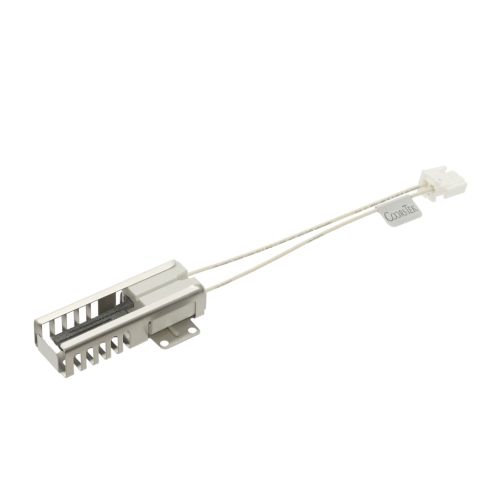 Samsung DG94-00520A Range Oven Hot Surface Igniter AssemblySpecial Price $157.66 Regular Price $211.33
 -
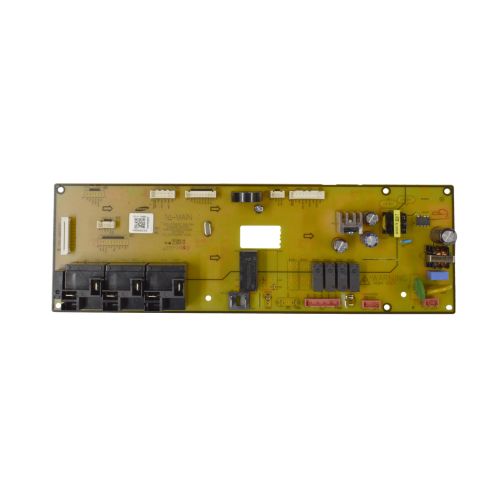 Samsung DE92-03761B Range Oven Main Control BoardSpecial Price $175.63 Regular Price $274.00
 -
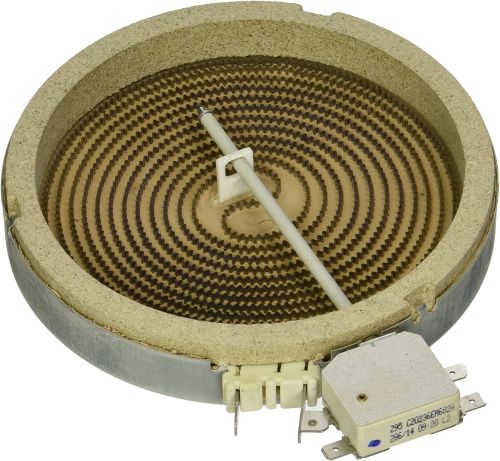 Samsung DG47-00023A Range Oven Radiant Surface ElementSpecial Price $146.49 Regular Price $163.51