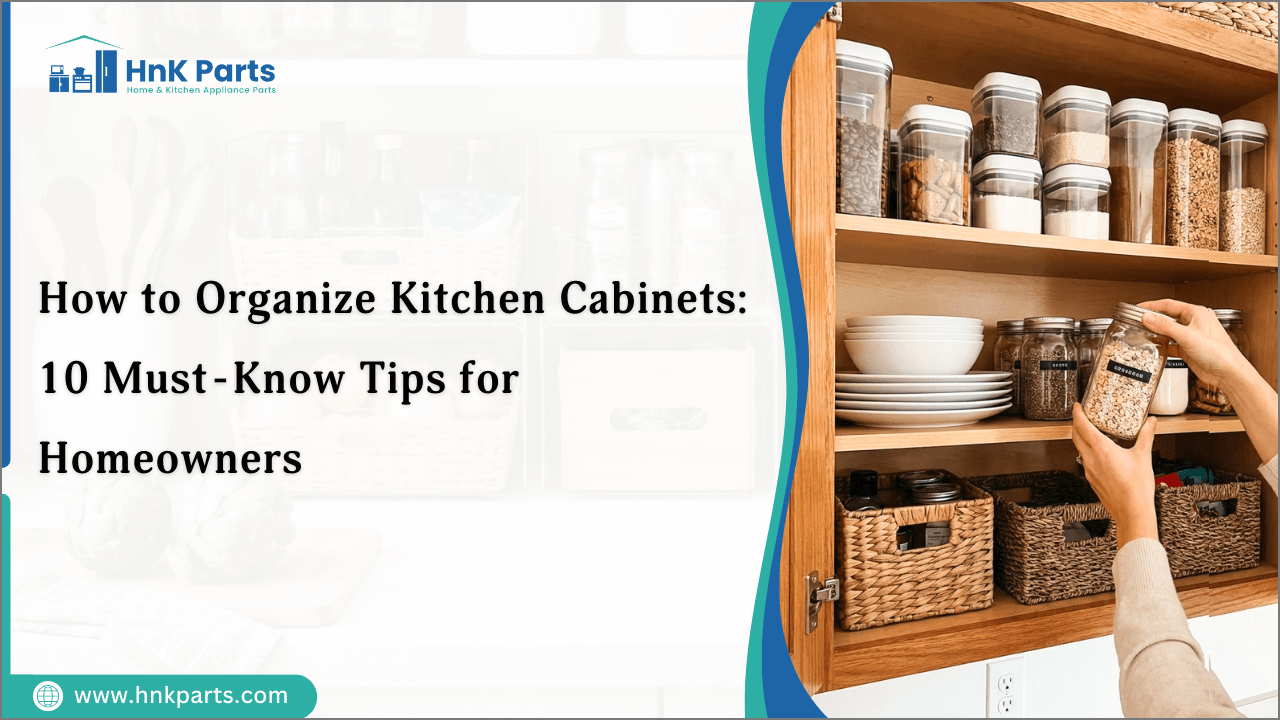
How to Organize Kitchen Cabinets: 10 Must-Know Tips for Homeowners
Modern kitchens must support fast-paced lifestyles while staying clean, safe, and efficient. However, cluttered cabinets often hinder everyday cooking, leading to wasted time, overcrowding, and frustration. Poor kitchen cabinet organization affects workflow, food management, and safety.
Learning how to organize kitchen cabinets goes beyond cosmetic upgrades—it creates immediate, long-term improvements in usability. With the right structure, smart storage tools, and consistent habits, homeowners can build an organized cabinet system that supports smoother routines, better visibility, and a calmer, more functional kitchen environment.
Why Kitchen Cabinet Organization Matters for Modern Homes
Kitchen cabinets are the backbone of daily kitchen function. When poorly organized, they disrupt workflow, reduce usable space, and increase the risk of spills, breakage, and accidents. In modern homes—where kitchens often serve multiple roles beyond cooking—efficient cabinet systems are essential.
Several factors make kitchen cabinet organization more important than ever:
-
Time Efficiency and Workflow: Disorganized cabinets slow down routine tasks such as cooking, unloading the dishwasher, or meal prep. When frequently used items are hard to access, small inefficiencies add up daily.
-
Space Optimization Without Renovation: Most kitchens already have enough cabinet space; the problem lies in how it’s used. Proper organization unlocks hidden capacity without the cost of remodeling.
-
Food Management and Waste Reduction: Poor visibility leads to expired food and duplicate purchases. Organized cabinets improve inventory awareness and support smarter grocery habits.
-
Safety and Stability: Overstacked dishes, unstable cookware, and cluttered shelves increase the risk of accidents. Thoughtful kitchen storage solutions keep items secure and accessible.
-
Cleanliness and Maintenance: Organized cabinets are easier to clean, reducing dust buildup, moisture issues, and pest risks.
In short, cabinet organization is not cosmetic—it’s a functional infrastructure for a modern kitchen.
Check out how to perfectly match kitchen appliances with cabinet style, which guides you on selecting finishes, colors, and designs that complement cabinetry for a cohesive, well-balanced kitchen look.
Decluttering and Sorting Before Organizing Kitchen Cabinets
An effective organization always starts with decluttering. Attempting to organize without removing excess items simply rearranges the problem.

Decluttering sets the foundation for all future kitchen organizing tips and ensures that every item kept earns its place.
Smart Storage Solutions to Maximize Kitchen Cabinet Space
Once cabinets are decluttered, the next step is selecting smart kitchen cabinet organizers that improve accessibility rather than simply increasing density. The table below converts the core storage solutions into a clear, scannable format that helps homeowners quickly identify the best kitchen storage solutions for each cabinet type.
|
Storage Solution |
Best Use Case |
Key Benefit |
Ideal Cabinet Type |
|
Adjustable Shelving |
Plates, bowls, pantry containers, small appliances |
Allows shelf heights to be customized, eliminating wasted vertical space and accommodating items of different sizes |
Upper cabinets |
|
Pull-Out Shelves & Drawers |
Pots, pans, heavy cookware, stored items in deep cabinets |
Improves accessibility by bringing items fully forward, eliminating blind reach and reducing strain |
Base cabinets |
|
Vertical Dividers |
Baking sheets, cutting boards, trays, lids |
Keeps flat items upright to prevent stacking, bending, or damage while improving visibility |
Narrow or tall cabinets |
|
Stackable Racks & Shelf Risers |
Dishes, cups, glassware |
Creates a second storage level on existing shelves without drilling or permanent installation |
Upper cabinets |
|
Drawer Inserts & Bins |
Utensils, spices, small tools, measuring accessories |
Separates small items into defined sections, reducing clutter and speeding up access |
Drawers |
|
Under-Sink Organizers |
Cleaning supplies, bottles, sprays |
Maximizes irregular cabinet space around plumbing while preventing spills and leaks |
Under-sink cabinets |
|
Door-Mounted Storage |
Spices, lids, cleaning accessories |
Converts unused cabinet door space into functional storage, improving visibility and accessibility |
Cabinet doors |
Well-chosen kitchen storage solutions prioritize visibility, accessibility, and adaptability—helping homeowners create an efficient cabinet system without overcrowding or unnecessary complexity.
How to Organize Kitchen Cabinets for Everyday Efficiency
The most effective kitchen cabinet systems are designed around daily behavior, not visual symmetry alone. Organizing for everyday efficiency means aligning cabinet placement with how the kitchen is actually used, ensuring faster workflows, easier access, and long-term consistency.
-
Organize by Frequency of Use: Store everyday dishes, glasses, and cookware in prime zones at eye level and near prep or cooking areas. Frequently used items should require minimal reaching or bending to access.
-
Separate Secondary Storage Areas: Place specialty appliances, bulk cookware, and seasonal items in higher or lower cabinets where they remain accessible but do not interfere with daily routines.
-
Create Task-Based Cabinet Zones: Group items by activity to support natural kitchen workflows. Keep cooking tools near the stove, prep tools near counters, baking supplies together, and food storage containers close to the refrigerator.
-
Workflow-Driven Layout Design: A task-based cabinet layout reduces unnecessary movement and improves speed, making it the best way to organize kitchen cabinets for consistency and efficiency.
-
Limit Heavy Items to Lower Cabinets: Store heavy cookware, small appliances, and bulk food items in lower cabinets to improve safety and reduce strain during daily use.
-
Maintain Consistent Item Placement: Assign a single, dedicated location for every item and return it there after use. Consistency prevents clutter from gradually building up over time.
-
Use Labels Where Necessary: Clear, simple labels help maintain order in shared households and ensure everyone follows the same organization system.
-
Avoid Overfilling Cabinets: Leave enough space on shelves to access items easily without shifting stacks or removing multiple objects.
-
Align Cabinet Organization With Cleaning Habits: Keep frequently cleaned items easy to remove and return, making routine cabinet cleaning faster and more manageable.
-
Reevaluate Cabinet Layout Periodically: Review cabinet organization every few months to adjust for changing cooking habits, new appliances, or household needs.
By focusing on real-world usage patterns, homeowners transform cabinets into intuitive systems rather than storage puzzles.
Explore from smart assistants to intelligent homes: voice control systems powering home automation in 2026, which explores how voice-enabled technologies are advancing smart home automation, improving convenience, connectivity, and everyday living experiences.
Summary: Maintaining an Organized and Functional Kitchen Cabinet System
Kitchen cabinet organization is not a one-time task—it is an ongoing system that evolves with household needs. The most effective cabinet setups remain flexible, are reviewed regularly, and adapt as cooking habits, family size, or storage requirements change. Consistent maintenance ensures cabinets stay efficient, safe, and easy to use over the long term.
Key Takeaways
-
Kitchen cabinet organization works best as a flexible, evolving system
-
Regular maintenance prevents clutter from returning over time
-
Weekly resets keep items in their designated places
-
Quarterly reviews allow for small adjustments and layout improvements
-
Annual decluttering ensures cabinets stay aligned with current needs
-
Adjustable kitchen cabinet organizers support change without major rework
-
Smart kitchen storage solutions and workflow-based layouts ensure long-term efficiency
Looking for a reliable source for premium appliance replacement parts? Shop now at HnK Parts for high-quality home appliance repair parts engineered for durability, precise fit, and dependable performance. From everyday household appliances to advanced kitchen equipment, we help homeowners and service professionals minimize downtime, extend appliance lifespan, and restore optimal operation—backed by fast fulfillment and expert support you can count on.
Reference: https://justorganized.org/top-10-benefits-of-working-with-a-professional-organizer/
https://www.usda.gov/about-usda/news/blog/how-reduce-food-waste-home
FAQs
How often should kitchen cabinets be reorganized to maintain efficiency?
Light reorganization every 3–6 months helps maintain efficiency, while a full declutter once a year prevents long-term buildup.
What are the best materials for cabinet organizers in humid kitchens?
Moisture-resistant materials such as stainless steel, plastic, and treated bamboo perform best in humid environments.
How can cabinet organization improve kitchen safety and reduce accidents?
Proper organization prevents overcrowded shelves, falling items, and unstable stacks, reducing breakage and injury risks.
Are adjustable cabinet organizers better than fixed storage solutions?
Yes. Adjustable organizers adapt to changing needs and maximize space far more effectively than fixed systems.
What common mistakes should homeowners avoid when organizing kitchen cabinets?
Common mistakes include skipping decluttering, overfilling shelves, ignoring workflow, and using storage tools without a system.
-
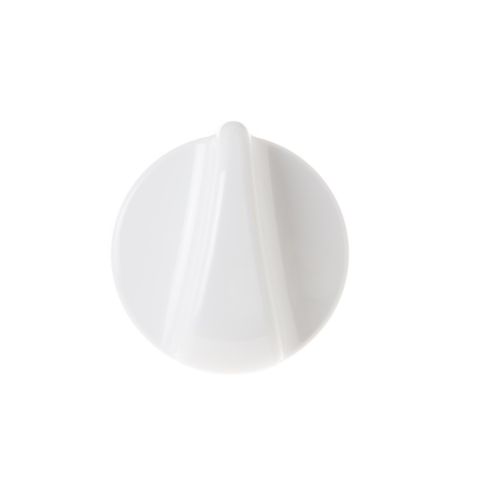 General Electric WB03K10034 Range White Burner KnobSpecial Price $20.59 Regular Price $23.74
 -
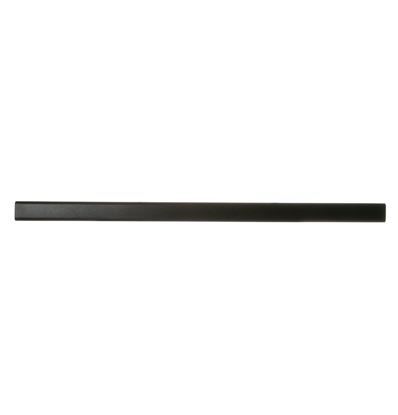 General Electric WB15X10003 Range Door HandleSpecial Price $73.23 Regular Price $99.70
 -
 General Electric WB17X211 Range Terminal Block ClipSpecial Price $16.77 Regular Price $18.95