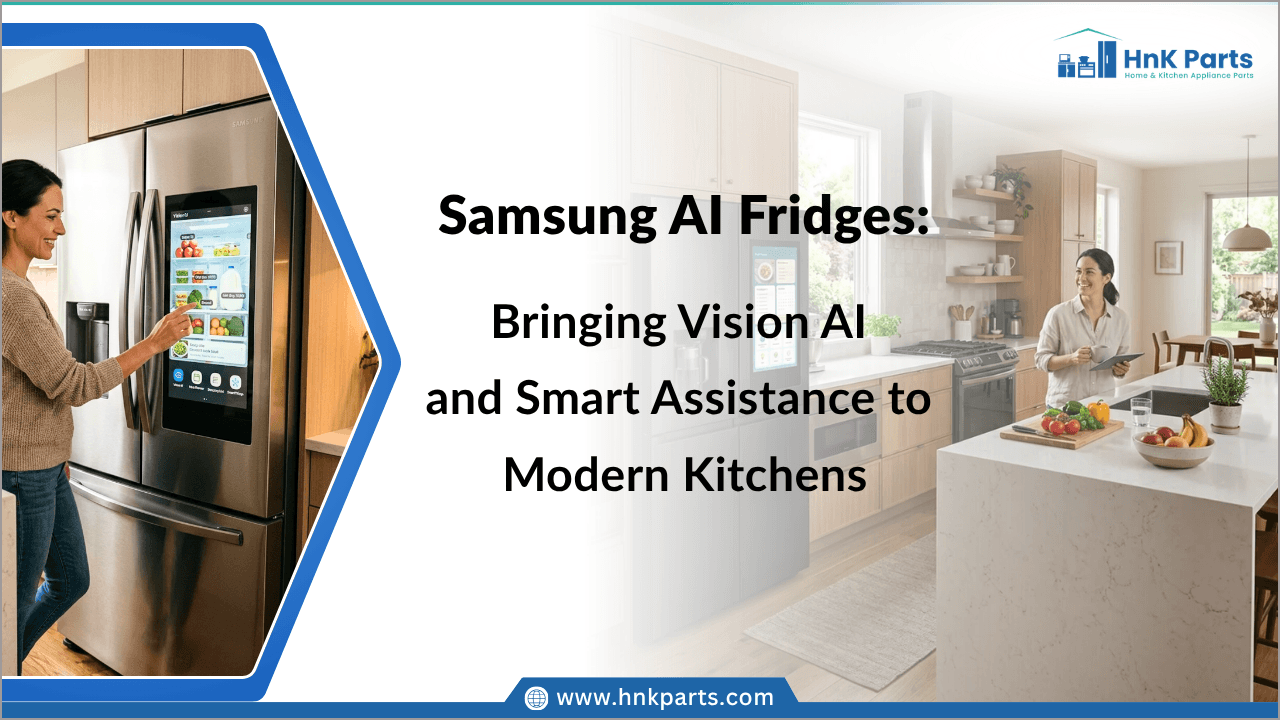
Samsung AI Fridges: Bringing Vision AI and Smart Assistance to Modern Kitchens
In the rapidly evolving world of smart home technology, the kitchen has become one of the most important spaces for innovation. Samsung AI fridges with Vision AI and smart assistance features are redefining how modern households manage food storage, cooking, and daily routines. These advanced refrigerators go beyond cooling by acting as intelligent home companions that support grocery tracking, energy efficiency, and meal planning.
Within smart-kitchen setups, nearly 42% use smart refrigerators, reflecting their growing presence in connected home environments. As smart living becomes more common in households, Samsung continues to lead innovation in AI-powered home appliances. This article explores how its AI fridge ecosystem is transforming everyday kitchen experiences and shaping the future of connected homes.
What Makes Samsung AI Fridges “Smart” in Modern Home Kitchens
Samsung AI refrigerators are considered smart appliances in modern kitchens because they integrate artificial intelligence, connectivity, and automation into everyday food storage and kitchen management tasks. These systems are designed to improve convenience, efficiency, and household organization. The following features make Samsung AI fridges stand out:
1. AI-Based Food Recognition and Inventory Management: Samsung’s Bespoke AI Family Hub refrigerators use internal cameras and AI Vision technology to identify and track food items placed inside the fridge. The system recognizes fresh food and packaged goods, then creates a digital inventory viewable on the fridge screen or a connected smartphone.
2. Expiration Tracking and Food Usage Alerts: The system allows users to assign or monitor expiration dates for stored items. It then sends alerts when food is approaching its use-by date, helping households reduce food waste and improve grocery planning efficiency.
3. Recipe Recommendations and Meal Planning Support: Based on stored inventory, the refrigerator suggests recipes using available ingredients and can guide users through preparation steps. In some advanced AI ecosystems, integrations with models like Google Gemini can further enhance contextual recipe suggestions and personalized meal planning experiences.
4. Smart Touchscreen Control Hub: Many models include a large Family Hub touchscreen that functions as a central kitchen control panel. Users can manage calendars, notes, grocery lists, media, and connected smart home devices through one interface.
5. Voice Assistant and Smart Home Integration: Samsung AI refrigerators include a built-in voice assistant with Bixby that supports natural voice conversations, enabling hands-free operation to control settings, check information, manage features, and receive quick smart responses like reminders, schedules, and updates instantly.
6. Energy Optimization and Adaptive Cooling: The refrigerator uses intelligent energy optimization to adjust cooling performance based on usage patterns automatically, reducing compressor activity during low-demand periods and improving overall energy efficiency while lowering electricity consumption.
How Vision AI Technology Enables Food Recognition Inside Samsung Refrigerators
Samsung refrigerators use AI Vision Inside technology from Samsung Electronics, which uses an internal camera and cloud-based AI to detect and manage food items. It captures images whenever the door opens or closes and updates the inventory automatically for easy tracking. Here is how the system works:
Smart Fridge Imaging & Detection System: The refrigerator includes a strategically placed internal camera that scans shelf contents whenever the door is closed. The captured images are processed using AI-based visual analysis to identify items stored inside.
-
Camera Placement: Mounted at the top section for a complete shelf view
-
Automatic Scanning: Captures images instantly after the refrigerator door closes
-
Visual Processing: AI examines packaging, colors, shapes, and labels for recognition
AI-Based Food Recognition Engine: The system uses deep learning and image recognition models to distinguish between different types of food items. It continuously improves recognition accuracy through AI training and user feedback.
-
Fresh & Packaged Food Recognition: Detects vegetables, fruits, beverages, and branded products
-
Adaptive Machine Learning: Learns patterns over time for better identification accuracy
-
Manual Food Labeling: Users can add custom labels and expiry details through the fridge interface or the SmartThings app
Connected Inventory & Monitoring System: The refrigerator synchronizes food data with connected mobile devices to help users monitor groceries remotely. It also supports food management by tracking storage duration and item availability.
-
Remote Inventory Access: Users can check stored food using the SmartThings app
-
Food Freshness Tracking: Sends reminders before items become outdated
-
Ingredient-Based Assistance: Suggests meal ideas using available ingredients
Smart Grocery & Shopping Assistant: The AI system simplifies shopping preparation by identifying missing ingredients and organizing purchase recommendations automatically.
-
Smart Shopping Lists: Generates lists for ingredients that need replenishment
-
Online Grocery Connectivity: Works with platforms like Instacart for grocery ordering and delivery support
Benefits of Samsung AI Refrigerators in Everyday Household Use
Samsung AI refrigerators from Samsung Electronics offer practical everyday benefits focused on simplifying food management, shopping, and kitchen organization without changing daily routines completely. Here are the key benefits:
Family-Friendly Inventory Tracking: Vision AI cameras track around 37 fresh foods and 50+ packaged items, showing them on the 32-inch touchscreen or the SmartThings app. This helps family members quickly check groceries like milk remotely, saving time during busy mornings.
Shared Grocery List Management: The system syncs shopping needs across family devices, helping avoid duplicate purchases. Expiry alerts also highlight unused items, reducing waste by 20–30% and supporting yearly savings.
Quick Meal Suggestions: The fridge suggests simple recipes based on available ingredients, including 15-minute meals through Samsung Food integration. Personalized recommendations adapt to dietary needs for easier daily cooking decisions.
Hands-Free Cooking Support: With Bixby, users can control functions using voice commands while cooking, and auto-open doors improve convenience during multitasking.
Energy Efficiency Optimization: AI Hybrid Cooling adjusts performance based on usage patterns, reducing energy consumption by approximately 10% and ensuring quieter operation during periods of low usage.
Overall, these features make everyday kitchen management more efficient, organized, and convenient for modern households.
Explore Samsung’s new AI home screens for smarter fridge controls for improved daily kitchen management.
How Samsung AI Refrigerators Address Daily Kitchen Challenges
Modern kitchens often face small daily inefficiencies in food use and organization. AI-powered refrigerators help address these issues through smarter tracking and automation. Here are the key challenges and their solutions:
Challenge: “Invisible Food Drift” in Large Families
In many households, food items get gradually moved, rearranged, or pushed to the back of shelves, making them effectively “invisible” even though they are still available.
Solution: Vision AI tracking continuously maps stored items digitally, so users can see a clear, updated view of what is inside without physically searching the fridge.
Challenge: Fragmented Grocery Memory Across Family Members
Different family members often remember different grocery needs, leading to incomplete or overlapping purchases.
Solution: The synced inventory system through the SmartThings app creates a shared, always-updated food record accessible to everyone in the household.
Challenge: Decision Fatigue During Daily Cooking
Even with ingredients available, users often spend unnecessary time deciding what combinations can realistically form a meal.
Solution: The AI system reduces this friction by suggesting meal options based on current fridge items, helping users make faster cooking decisions.
Challenge: Underuse of Stored Ingredients Over Time
Certain ingredients tend to remain unused simply because users forget they can be combined in multiple ways.
Solution: The system highlights ingredient usage opportunities through recipe suggestions, improving overall ingredient utilization.
Summary: The Future of AI-Powered Smart Refrigeration in Connected Homes
The next phase of smart refrigeration is shifting toward systems that understand household behavior patterns rather than just tracking items inside the fridge. As appliances become more interconnected, refrigerators from Samsung Electronics are expected to play a larger role in coordinating kitchen activity across devices and family members. This evolution moves the fridge from a reactive tool to a predictive home system that supports daily living in a more subtle and automated way.
Key Takeaways:
-
Future smart fridges will focus more on predicting usage patterns than only tracking stored items.
-
Kitchen devices will increasingly work as a coordinated system rather than isolated appliances.
-
Household routines may be mapped over time to reduce repeated manual inputs and decisions.
-
Food management is expected to shift toward “need anticipation” instead of manual checking.
-
Cross-device ecosystems like SmartThings will become central control layers for home coordination.
-
Advanced AI models such as Google Gemini may enable more contextual, behavior-based assistance instead of simple command responses.
Wondering where to get quality Samsung fridge parts with cost-saving prices? Bring your refrigerator back to smooth performance with affordable home and kitchen appliance parts from HnK Parts. Shop high-quality components like temperature sensors, control boards, airflow fans, compressors, thermostats, door seals, and relays with fast doorstep delivery and budget-friendly pricing all in one place.
References:
https://bbbprograms.org/media/newsroom/decisions/samsung
https://good-design.org/projects/samsung-ai-family-hub-french-door-refrigerator/
FAQs
Can multiple family members control Samsung AI Fridge settings?
Yes, access can be shared through connected accounts on the SmartThings app, allowing different users to view inventory, add items, and update grocery lists in real time.
How secure is the data from the internal fridge camera?
Samsung AI Fridges process visual data mainly for food recognition and inventory management. Users can manage permissions, and data handling follows Samsung’s standard privacy and security protocols for connected devices.
What is the accuracy level of food recognition in Samsung AI Fridges?
Recognition accuracy is higher for branded and well-packaged items. Fresh produce or visually similar items may sometimes require manual confirmation, and system accuracy improves over time through user corrections.
Does Samsung AI Fridge work without internet connection?
Basic refrigeration and manual functions work offline, but AI-based features such as food recognition, remote access, and cloud-based suggestions require an active Wi-Fi connection.
| Disclaimer: This article is intended for informational purposes only; actual product features may differ based on updates, versions, or regional availability. |
-
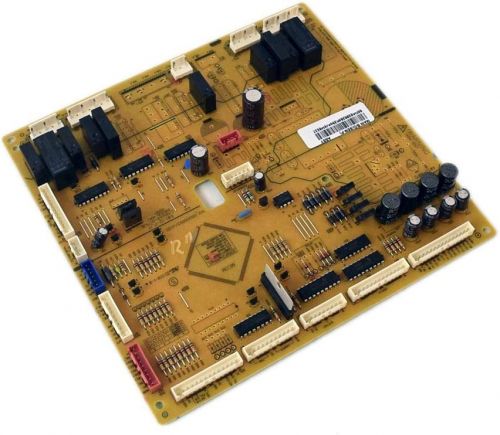 Samsung DA92-00384K Refrigerator Electronic Control BoardSpecial Price $68.86 Regular Price $83.95
 -
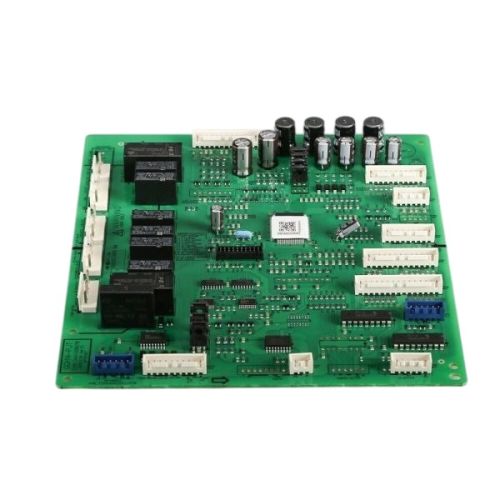 Samsung DA92-00606E Refrigerator Main PCB AssemblySpecial Price $73.46 Regular Price $82.80
 -
 Samsung DA94-02680A Refrigerator Main PCB AssemblySpecial Price $198.24 Regular Price $258.12