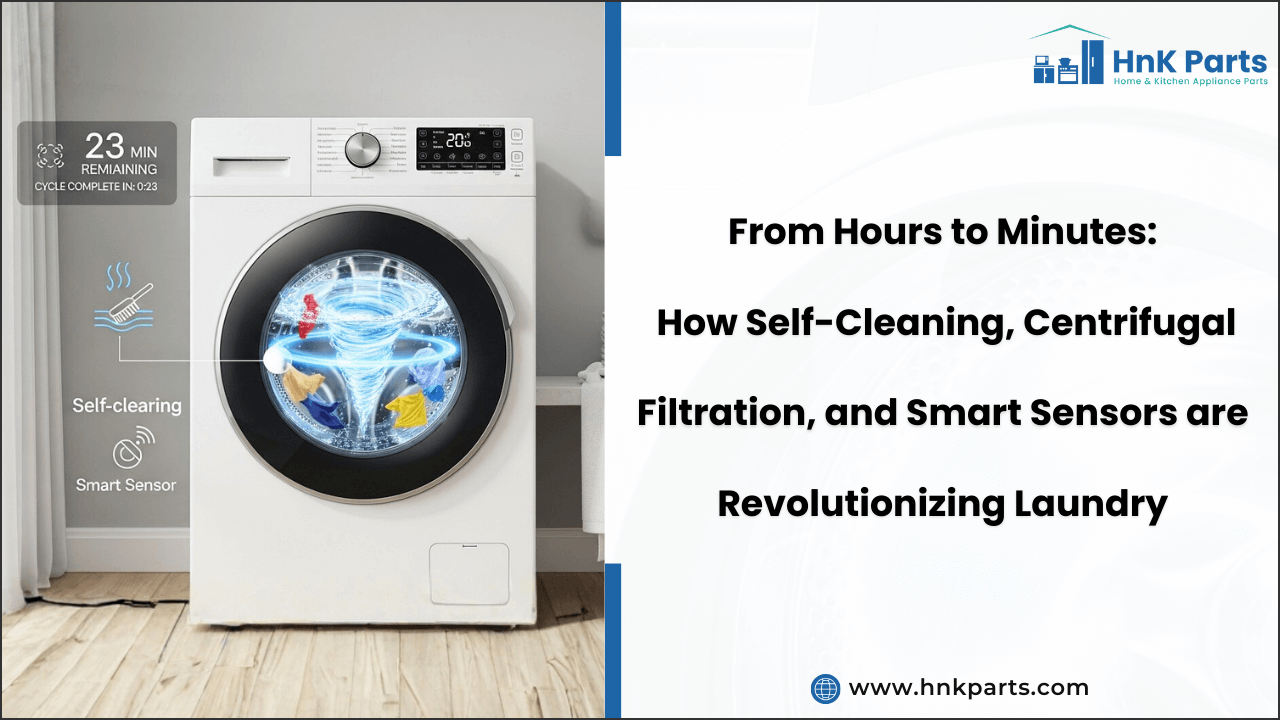
From Hours to Minutes How Self-Cleaning, Centrifugal Filtration, and Smart Sensors Are Revolutionizing Laundry
Laundry has long been considered a time-consuming and resource-intensive task. Traditional washing systems often require frequent manual maintenance, extended cycle times, and repeated rewashes due to residue buildup, fabric wear, or inconsistent cleaning results. Today, however, laundry technology is undergoing a significant transformation.
Innovations such as self-cleaning systems, centrifugal filtration, and smart sensor technology are redefining how modern laundry appliances function. These advancements go beyond minor upgrades, representing a fundamental shift in how machines maintain hygiene, conserve water and energy, and optimize overall performance. Tasks that once required hours of supervision and maintenance can now be completed in minutes with minimal human involvement.
Driven by rising labor costs, stricter hygiene standards, sustainability requirements, and the need for faster turnaround times, next-generation laundry systems are rapidly being adopted across residential, commercial, and industrial settings.
Why Laundry Technology Is Undergoing Rapid Transformation
Laundry systems today are expected to do far more than simply wash clothes. Modern users demand speed, consistency, hygiene, and sustainability—without increasing operational complexity or maintenance requirements.
Several forces are accelerating innovation in laundry technology:
-
Rising Labor and Time Costs: Manual cleaning, filter replacement, and machine downtime significantly increase operating costs in both homes and commercial facilities.
-
Higher Hygiene Expectations: Healthcare, hospitality, and food-service environments require strict contamination control and residue-free washing processes.
-
Water and Energy Conservation Pressure: Efficiency regulations and sustainability goals are pushing manufacturers to eliminate waste and improve resource utilization.
-
Demand for Automation and Predictability: Smart systems that detect issues, self-correct, and optimize cycles are becoming standard expectations rather than premium features.
Together, these factors have driven the adoption of self-cleaning mechanisms, centrifugal filtration systems, and intelligent sensor-based automation.
The Core Technologies Powering Faster, Smarter Laundry
Modern high-performance laundry systems rely on three tightly integrated technologies that work together to minimize downtime, maximize cleanliness, and improve operational efficiency.
Core Technologies Revolutionizing Modern Laundry Systems
|
Technology |
Purpose |
How It Works |
Key Benefits |
|
Self-Cleaning Laundry Systems |
Eliminates manual internal maintenance and hygiene-related inefficiencies |
• Automatically rinses drum and tub after wash cycles • Flushes out detergent residue, lint, and microbial buildup |
• Prevents odor formation and bacterial growth • Reduces reliance on chemical cleaning agents • Maintains peak washing performance • Eliminates scheduled downtime and user intervention |
|
Centrifugal Filtration Technology |
Replaces traditional mesh filters with high-speed separation |
• High-speed rotation generates centrifugal force • Dirt, lint, hair, and debris are separated from wash water • Clean water is recirculated while solids are isolated |
• No clogged filters • Continuous water flow • Reduced rewash cycles • Significantly lower maintenance time |
|
Smart Sensor and Automation Systems |
Acts as the intelligence layer controlling wash optimization |
• Sensors monitor load weight, fabric type, soil level, and turbidity • Automatically adjusts water level, temperature, and cycle duration • Detects vibration and imbalance in real time |
• Shorter and more efficient wash cycles • Reduced energy and water consumption • Consistent cleaning quality • Improved fabric care • Eliminates manual guesswork |
Explore the future of laundry with innovative washers and dryers designed for faster performance, smarter automation, and improved energy efficiency.
How These Innovations Reduce Cycle Time from Hours to Minutes
Individually, each technology improves efficiency. When combined, they create a system-level transformation that drastically shortens total laundry time.
-
Elimination of Manual Cleaning Delays: Self-cleaning systems remove the need for downtime between cycles.
-
Continuous Water Quality Control: Centrifugal filtration prevents contamination buildup that would otherwise require extended rinsing.
-
Real-Time Optimization: Smart sensors select the shortest effective cycle instead of defaulting to conservative, time-heavy programs.
-
Reduced Rewash Frequency: Consistent water purity and adaptive washing reduce the need for repeat loads.
The result is a streamlined laundry process where washing, maintenance, and quality control occur simultaneously rather than sequentially.
Impact on Residential and Commercial Laundry Operations
Advanced laundry technologies reduce cycle times, minimize maintenance, and improve hygiene, delivering faster performance and lower operating costs for both residential and commercial environments.
Impact on Residential Users
-
Faster Wash Cycles With Consistent Results: Advanced automation and smart sensors optimize each cycle based on load size and fabric type, allowing clothes to be cleaned thoroughly in less time without sacrificing wash quality.
-
Reduced Detergent and Water Consumption: Self-cleaning systems and intelligent water management prevent residue buildup and overuse, leading to more efficient detergent dosing and lower overall water usage.
-
Improved Fabric Care and Garment Longevity: Adaptive cycle control adjusts agitation, temperature, and spin speed to suit different fabrics, reducing wear and tear and helping garments maintain their quality longer.
-
Lower Maintenance and Cleaning Effort: Automatic internal cleaning and filterless filtration reduce the need for manual cleaning, chemical treatments, and frequent maintenance tasks.
-
Odor-free Drums and Hygienic Operation: Continuous removal of residue and microbial buildup prevents unpleasant odors and supports a cleaner, more hygienic washing environment.
-
Predictable Performance With Minimal Oversight: Smart monitoring ensures consistent results across cycles, allowing users to operate machines with confidence and minimal supervision.
Smart, self-maintaining machines allow households to complete laundry efficiently without sacrificing cleanliness or convenience.
Impact on Commercial and Industrial Operations
-
Increased Throughput and Reduced Turnaround Time: Shorter cycle durations and reduced downtime enable facilities to process more loads in less time, improving overall productivity.
-
Lower Labor Requirements for Machine Upkeep: Self-cleaning mechanisms and reduced maintenance needs minimize manual intervention, freeing staff for higher-value tasks.
-
Consistent Wash Quality Across High-Volume Loads: Centrifugal filtration and sensor-driven optimization ensure uniform cleaning results, even during continuous or heavy usage.
-
Reduced Downtime and Maintenance Costs: Elimination of clogged filters and predictive maintenance alerts helps prevent unexpected breakdowns and costly repairs.
-
Improved Compliance with Hygiene Standards: Automated cleaning and precise control over wash conditions support strict sanitation requirements in commercial and industrial environments.
-
Better Resource Efficiency and Utility Cost Control: Optimized water and energy usage lower operating costs and support sustainability goals while maintaining high performance levels.
For laundromats, hotels, hospitals, and industrial facilities, these technologies translate directly into higher profitability and operational reliability.
What to Look for in a Next-Generation Laundry System
When selecting a next-generation laundry system, buyers should focus on integrated performance rather than individual features. The most advanced machines are designed to operate as intelligent, self-optimizing systems that deliver long-term efficiency and reliability.
-
Fully Automated Self-Cleaning Mechanisms: Ensure that the drum, tub, and internal pathways remain free from detergent residue, lint, and microbial buildup. This reduces manual maintenance, prevents odors, and maintains consistent wash quality over time.
-
Advanced Centrifugal or Filterless Water Separation: Technology eliminates traditional mesh filters that clog and restrict water flow. By continuously separating debris from wash water, these systems improve cleaning consistency and reduce rewash cycles.
-
Multi-sensor Intelligence with Adaptive Cycle Control: Allows the machine to automatically adjust water levels, temperature, cycle duration, and agitation based on load size, fabric type, and soil level, resulting in faster and more efficient washes.
-
Proven Energy and Water Efficiency Ratings: Indicate compliance with modern sustainability standards and translate into lower operating costs throughout the machine’s lifespan.
-
Durable Materials Designed for Continuous Operation: Essential for maintaining performance under frequent or high-volume usage conditions.
-
Diagnostic Feedback and Predictive Maintenance Alerts: Important for identifying potential issues early, minimizing downtime, and reducing repair expenses.
-
Long-term Reliability and Service Support: Ensure consistent performance and protect the investment over years of operation.
Machines that combine all these capabilities offer the highest operational efficiency and long-term value.
Check out laundry made easy with top picks for the best washers and dryers that deliver reliable performance, smart features, and efficient cleaning for everyday convenience.
Final Thoughts on the Future of High-Efficiency Laundry
Laundry technology is no longer just about cleaning power—it now focuses on speed, automation, and sustainability. Self-cleaning systems, centrifugal filtration, and smart sensors work together to reduce maintenance, ensure consistent performance, and optimize efficiency. These innovations are transforming laundry into a faster, smarter, and more hygienic process for both residential and commercial environments.
Key Takeaways
-
Modern laundry systems are shifting toward fully automated, self-maintaining operation
-
Centrifugal filtration eliminates clogging and improves wash consistency
-
Smart sensors optimize cycle time, water use, and fabric care
-
Combined technologies dramatically reduce total laundry time
-
Next-generation machines deliver higher efficiency, lower costs, and better hygiene
Looking for reliable, high-quality replacement parts to keep next-generation laundry appliances running at peak performance? At HnK Parts, we provide a comprehensive range of durable home and kitchen appliance repair parts for leading brands, including LG, Samsung, Whirlpool, GE, and more. From motors, sensors, and control boards to pumps, filters, and valves, our components are engineered to restore efficiency, extend equipment lifespan, and ensure the long-term reliability of modern, high-performance washing machines.
References:
https://thelaundryclub.org/the-future-of-laundry
https://www.artisan-contracting.ca/blog/laundry-room-renovations-inspiration-tips-more
FAQs
How do self-cleaning laundry systems improve efficiency?
Self-cleaning systems automatically remove residue, lint, and bacteria from internal components, reducing maintenance time, preventing odors, and maintaining consistent wash performance without manual intervention.
What is the advantage of centrifugal filtration over traditional filters?
Centrifugal filtration prevents clogging by separating debris through high-speed rotation, ensuring continuous water flow, improved wash consistency, and reduced need for rewashing.
How do smart sensors shorten laundry cycle times?
Smart sensors analyze load size, fabric type, and soil level in real time, allowing the machine to select the shortest effective cycle while optimizing water, energy, and temperature usage.
Are next-generation laundry systems suitable for commercial use?
Yes, these systems are ideal for commercial environments, as they reduce downtime, lower labor and utility costs, ensure consistent hygiene standards, and support high-volume, continuous operation.
-
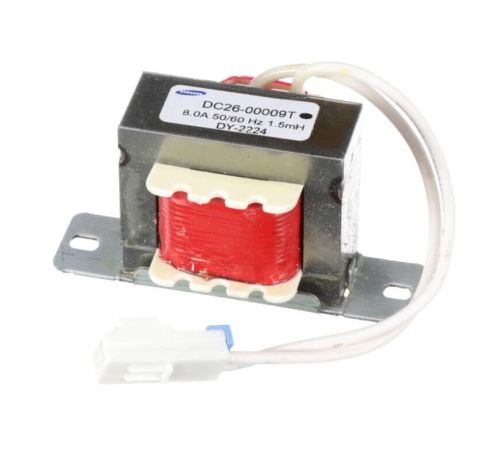 Samsung DC26-00009T Washer Harmonic CoilSpecial Price $69.96 Regular Price $87.73
 -
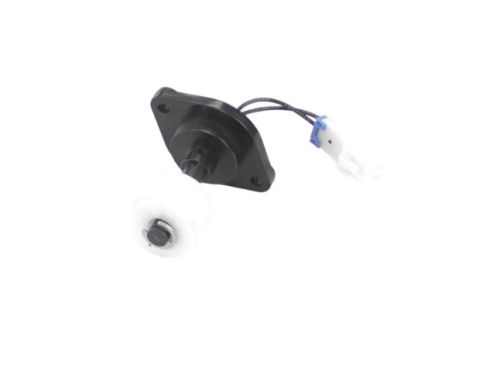 Samsung DC34-00010A Washing Machine Float SwitchSpecial Price $59.23 Regular Price $75.95
 -
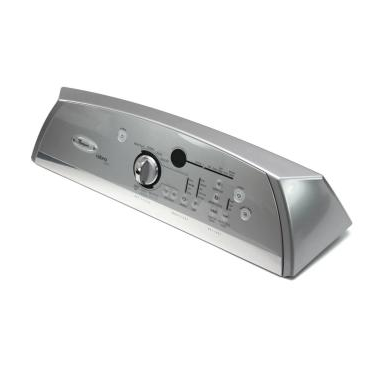 Whirlpool W11384512 Dryer ConsoleSpecial Price $277.93 Regular Price $299.95
 -
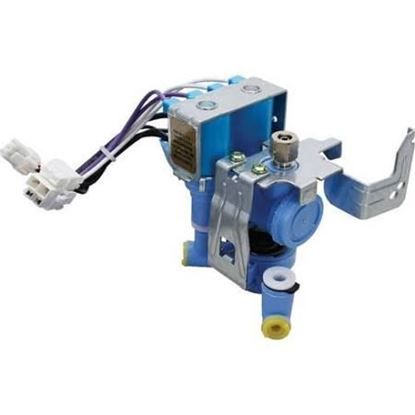 Samsung DA97-07827B Refrigerator Water Inlet ValveSpecial Price $134.86 Regular Price $164.54
 -
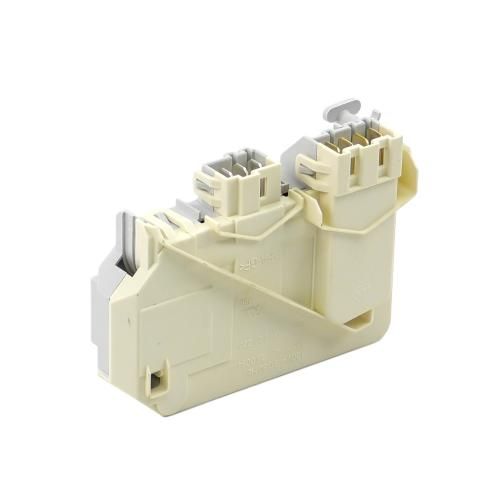 Samsung DC64-00652E Washing Machine Door Lock SwitchSpecial Price $142.83 Regular Price $170.04