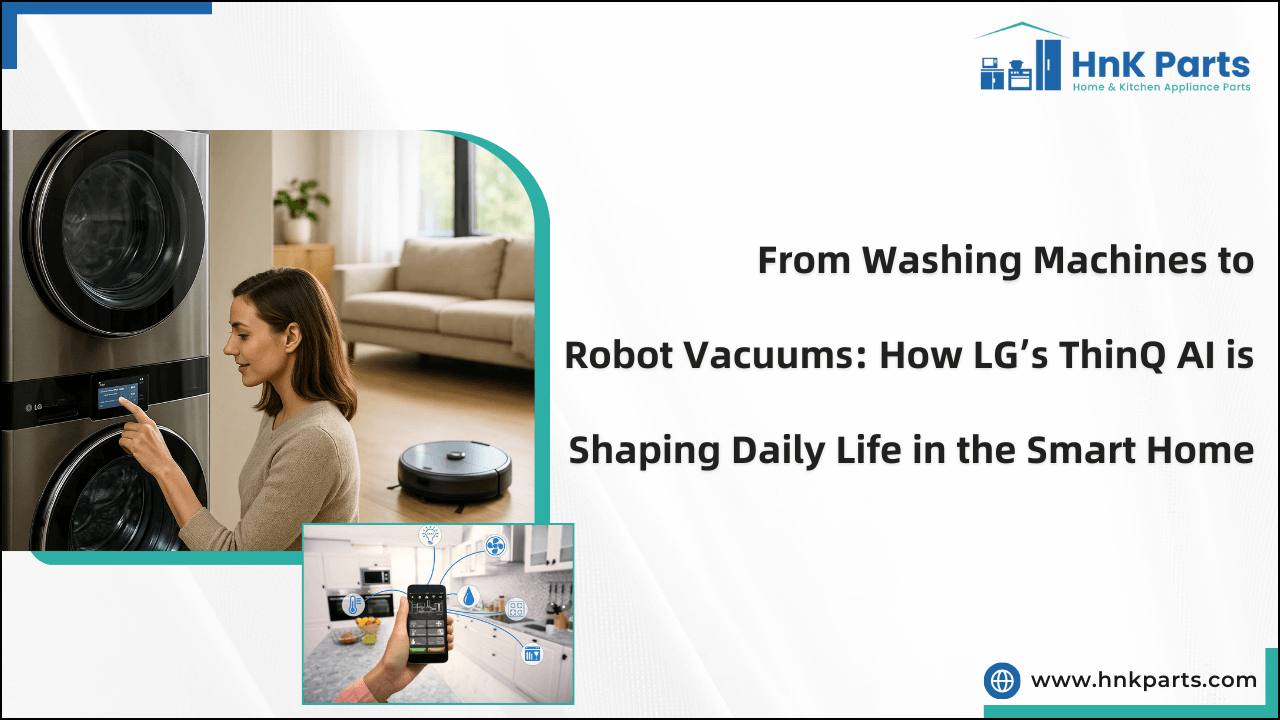
From Washing Machines to Robot Vacuums: How LG’s ThinQ AI is Shaping Daily Life in the Smart Home
Smart homes have evolved from isolated gadgets to connected ecosystems that learn, adapt, and automate daily routines. At the center of this transformation is LG’s ThinQ AI, a platform that unifies appliances and sensors to optimize energy use, predict user needs, and streamline tasks. From self-adjusting washers to precision-mapping robot vacuums, ThinQ marks a new era of intelligent, effortless home management.
ThinQ AI integrates machine learning, cloud connectivity, and real-time data analytics to help homeowners manage chores, improve efficiency, and personalize their living environment. This article explores how LG ThinQ AI works, the technology behind its automation capabilities, and how it is transforming essential home activities across washing, cooking, cleaning, and climate control.
Understanding the Main Concept of LG ThinQ AI
LG ThinQ AI is built on the principle that appliances should not simply automate tasks—they should learn from user behavior and tailor operations accordingly. Unlike conventional smart devices that operate on fixed commands, ThinQ-enabled appliances collect data, analyze patterns, and adjust their performance in real time.
-
User Behavior Learning Mechanism: ThinQ appliances study daily habits—from wash preferences to cooking and climate routines—to create personalized profiles that anticipate user needs automatically.
-
Adaptive Decision Logic: ThinQ AI analyzes data like load weight, fabric type, dust levels, and occupancy to choose the most efficient settings, optimizing performance and extending appliance longevity.
-
Remote Monitoring & Control: The ThinQ app lets homeowners monitor performance, run diagnostics, schedule tasks, and receive alerts, while AI-driven recommendations improve appliance health and reduce energy use.
-
Interconnected AI Ecosystem: ThinQ connects appliances into a unified network, allowing devices to coordinate tasks—like a robot vacuum starting after the washer finishes or an air purifier adjusting when the stove is in use.
This foundational intelligence allows ThinQ AI to transform everyday household tasks into seamless, automated flows.
How ThinQ AI Transforms the Modern Laundry Experience
Laundry is one of the most repetitive and time-consuming chores, yet it is also one of the most suitable tasks for AI-driven automation. LG ThinQ washing machines and dryers use a combination of sensors, machine learning, and predictive algorithms to deliver optimal fabric care with minimal user involvement.
-
AI Fabric Sensor Intelligence: ThinQ washers detect fabric types through weight, drum movement, and moisture patterns, automatically selecting the best temperature, agitation, and rinse settings for optimal care.
-
Load Optimization Algorithms: Using weight sensors and rotational inertia data, the AI calculates exactly how much water and detergent each load requires. This avoids overuse, saves resources, and enhances wash quality.
-
Energy and Time Efficiency Modes: ThinQ analyzes load size, fabric type, and wash requirements to recommend eco-friendly cycles that minimize energy use, save time, and reduce environmental impact.
-
Predictive Maintenance Alerts: ThinQ monitors vibration, water pressure, detergent flow, and motor performance to detect early signs of wear, allowing timely maintenance that extends appliance lifespan.
-
Seamless App Integration: Users get cycle alerts, low-detergent notifications, and maintenance prompts and can even download custom wash cycles like baby-care or sportswear modes directly to the machine.
Through these interconnected capabilities, ThinQ transforms laundry from a manual chore into a guided, intelligent process that improves quality and efficiency.
Smarter Cleaning With Robot Vacuums: Predictive Home Maintenance
Robot vacuums may seem like simple cleaning tools, but LG ThinQ elevates them into highly intelligent housekeeping devices that understand home layouts, adapt to flooring types, and communicate with other appliances.
-
Advanced Mapping and Localization: ThinQ robot vacuums use LiDAR, infrared sensors, and smart navigation to map your home, avoid obstacles, and target high-dust areas, ensuring faster and more efficient cleaning.
-
Adaptive Suction and Surface Detection: Sensors detect transitions from tile to carpet or hardwood, prompting the AI to adjust suction power, roller speed, and movement patterns. This ensures deeper cleaning without wasting battery life.
-
Self-Adjusting Cleaning Routines: ThinQ analyzes dust levels, foot traffic, and occupancy patterns to automatically adjust cleaning frequency—running more often during pollen season or periods of increased pet shedding.
-
Cross-Device Communication: ThinQ vacuums sync with other appliances—starting when the washer spins, pausing when the doorbell detects activity, and avoiding zones where other devices are running—to ensure smoother, smarter cleaning.
-
Diagnostics and Wear Forecasting: The AI monitors motor torque, wheel resistance, and brush wear to predict maintenance needs, reducing sudden breakdowns and extending device life.
Together, these capabilities turn robot vacuums from simple autonomous cleaners into integrated household assistants that adapt to real-world home dynamics.
Explore the secrets to transforming your home into a fresh, clutter-free space with the ultimate guide to spring cleaning for an organized home.
AI-Assisted Cooking, Monitoring, and Energy Management: Making Kitchens Intelligent
The kitchen is one of the most complex environments in the modern home, making it the perfect setting for ThinQ AI to shine. LG’s smart ovens, refrigerators, and dishwashers leverage AI to simplify meal preparation, food storage, and kitchen safety.
Smart Refrigeration with Food Recognition & Energy Optimization: ThinQ refrigerators use internal cameras and weight sensors to track stored items. With AI-based food recognition, users receive:
-
Expiration reminders
-
Recipe suggestions based on available ingredients
-
Energy-saving recommendations for temperature settings
Cooling output adjusts automatically based on door usage, time of day, and ambient temperature.
AI Cooking Assistance: ThinQ ovens and microwaves offer guided cooking modes powered by visual and thermal sensors. The AI:
-
Identifies food types
-
Uses ideal cooking times and temperatures
-
Detects doneness via moisture and heat signatures
-
Alerts the user when the dish reaches optimal consistency
This reduces overcooking, enhances texture, and ensures reproducibility across meals.
Dishwasher Intelligence: ThinQ dishwashers evaluate soil levels, dish materials, and water turbidity to select the most effective wash cycle. With AI-driven cleaning intelligence, users benefit from:
-
Optimized wash settings based on real-time soil detection
-
Enhanced cleaning performance through targeted water-jet pressure
-
Gentle handling of delicate items with reduced spray intensity
Water flow and pressure adjust automatically based on load composition and cleanliness requirements.
Kitchen Safety Integration: ThinQ AI promotes safe conditions through:
-
Overheat detection in ovens
-
Gas leakage alerts
-
Automatic shut-offs
-
Notifications when refrigerator doors are left open
By learning usage habits, the system adjusts power levels, cycle durations, and maintenance routines to deliver a more consistent, efficient cooking environment.
Check out how innovative smart kitchen appliances are transforming modern cooking and revolutionizing the entire cooking experience.
How ThinQ Devices Communicate and Coordinate for Whole-Home Integration
ThinQ’s biggest advantage lies in ecosystem-wide collaboration. Instead of operating independently, devices share data to create a synchronized home environment that reduces workload and enhances comfort.
Event-Triggered Operations: Appliances react to real-time triggers:
-
Air purifiers activate when cooking increases indoor particulates.
-
Dryers delay cycles until electricity rates drop during off-peak hours.
-
Robot vacuums clean after the smart door sensor indicates everyone has left.
Routine Automation Scenarios: Users can build routines such as:
-
Morning Mode: The coffee maker brews, lights adjust, and the water heater activates.
-
Away Mode: Appliances power down, security systems activate, and cleaning devices begin their cycles.
-
Laundry-to-Drying Flow: Washers notify dryers to preheat and prepare for load transfer.
Voice Assistance Integration: ThinQ supports Google Assistant and Amazon Alexa, enabling hands-free interaction with:
-
Temperature control
-
Appliance start/stop commands
-
Status updates
-
Cooking guidance
Energy Ecosystem Coordination: ThinQ AI consolidates energy use across devices to improve efficiency, offering intelligent power management through:
-
Staggered high-power cycles to prevent energy spikes and reduce overall consumption
-
Automatic output adjustments during periods of high electricity demand
-
Real-time coordination across appliances to balance load distribution
-
Adaptive scheduling that aligns device operation with user habits and off-peak energy hours
This interconnected network transforms the home into an intelligent, living system that anticipates and responds to user routines.
Sensors, Algorithms, and Connectivity Working Behind the Scenes, Powering ThinQ AI
The magic of ThinQ AI comes from the sophistication of its underlying technology.
|
Technology Component |
Details / Capabilities |
|
High-Precision Sensors |
Appliances use temperature sensors, humidity monitors, vibration detectors, weight and pressure sensors, optical and motion sensors, and air quality analyzers to gather real-time operational data for accurate decision-making. |
|
Machine Learning Models |
ThinQ algorithms analyze millions of interactions to enable predictive maintenance, personalized operating modes, regional adaptation, and improved energy performance. |
|
Cloud and Edge Computing |
Combines cloud AI with local edge processing to deliver faster real-time responses, reduced dependence on internet connectivity, improved stability during outages, and quicker sensor-based automation. |
|
Secure Connectivity |
Wi-Fi, Bluetooth, and encrypted protocols ensure secure data transmission, reliable multi-device communication, strong user-data protection, and stable connectivity for real-time monitoring and control. |
Together, these technologies allow ThinQ to operate as a responsive, intelligent home management platform.
The Future of LG ThinQ: Autonomous Homes, Predictive Behaviors, and Sustainable Living
As AI capabilities advance, ThinQ is evolving beyond task automation into prediction and autonomy.
-
Self-Managing Homes: Future ThinQ systems may autonomously schedule chores, adjust indoor climate based on occupancy, and suggest lifestyle improvements by learning from long-term household patterns.
-
Greater Sustainability: AI will play a major role in reducing home energy consumption, optimizing waste management, and extending appliance life cycles.
-
Enhanced Human-Appliance Interaction: Next-generation appliances will understand context—tone of voice, daily rhythms, seasonal changes—offering more intuitive interactions.
-
Unified Smart Ecosystems: ThinQ’s long-term vision is a full-home operating system where every device, room, and service creates a unified user experience.
The result is a home that doesn’t just automate tasks—it enhances well-being, reduces stress, and creates time for what matters most.
Conclusion
LG’s ThinQ AI is transforming everyday living by turning ordinary appliances into intelligent, collaborative systems that learn, adapt, and optimize home routines. From laundry and cleaning to cooking and energy management, ThinQ enhances convenience, efficiency, and personalization across the entire home. As the technology evolves, it will anticipate needs more accurately and operate with greater autonomy. Ultimately, ThinQ AI sets the foundation for smarter, more sustainable homes designed around the user’s lifestyle.
Key Takeaways:
-
ThinQ devices will become increasingly responsive, autonomous, and predictive as cloud and edge computing advance.
-
Future smart homes will anticipate needs rather than rely solely on user commands.
-
ThinQ AI will play a major role in intelligent energy management and long-term efficiency.
-
The system will continuously learn and adapt to better match user lifestyles.
-
LG’s ThinQ AI is paving the way toward more intuitive, sustainable, fully autonomous homes.
Looking for dependable, high-quality appliance replacement parts? At HnK Parts, we offer a comprehensive selection of premium components for major brands like LG, Samsung, Whirlpool, GE, and more. Whether you need pumps, valves, motors, or control boards, we deliver durable, affordable parts designed to restore performance and extend the life of your appliances.
Reference:
https://www.openhab.org/addons/bindings/lgthinq/
https://www.energystar.gov/productfinder/product/certified-clothes-washers/details/2319458
FAQs
What makes LG ThinQ AI different from traditional smart home systems?
LG ThinQ AI goes beyond basic automation by learning user habits, analyzing real-time data, and coordinating multiple appliances to operate as a unified, intelligent ecosystem.
Do ThinQ appliances work without an internet connection?
Yes. While cloud connectivity enhances features, ThinQ devices use edge computing to perform essential functions and make instant adjustments even without internet access.
Can ThinQ AI help reduce home energy consumption?
Absolutely. ThinQ optimizes appliance usage, staggers high-power tasks, and adjusts performance based on energy demand, helping homeowners lower utility costs and improve overall efficiency.
-
 Frigidaire 316083100 Range Rocker SwitchSpecial Price $70.05 Regular Price $74.61
 -
 Speed Queen 53241 Washer Cam Timing-4 Pin-45 MinuteSpecial Price $45.92 Regular Price $46.87
 -
 Frigidaire 240350609 Refrigerator Glass Shelf Crisper PanSpecial Price $89.45 Regular Price $107.95
 -
 Whirlpool 8193646 Dishwasher Lower Detergent Dispenser Actuator KitSpecial Price $37.08 Regular Price $69.80
 -
 Whirlpool 8169738 Microwave Door HandleSpecial Price $67.47 Regular Price $79.95