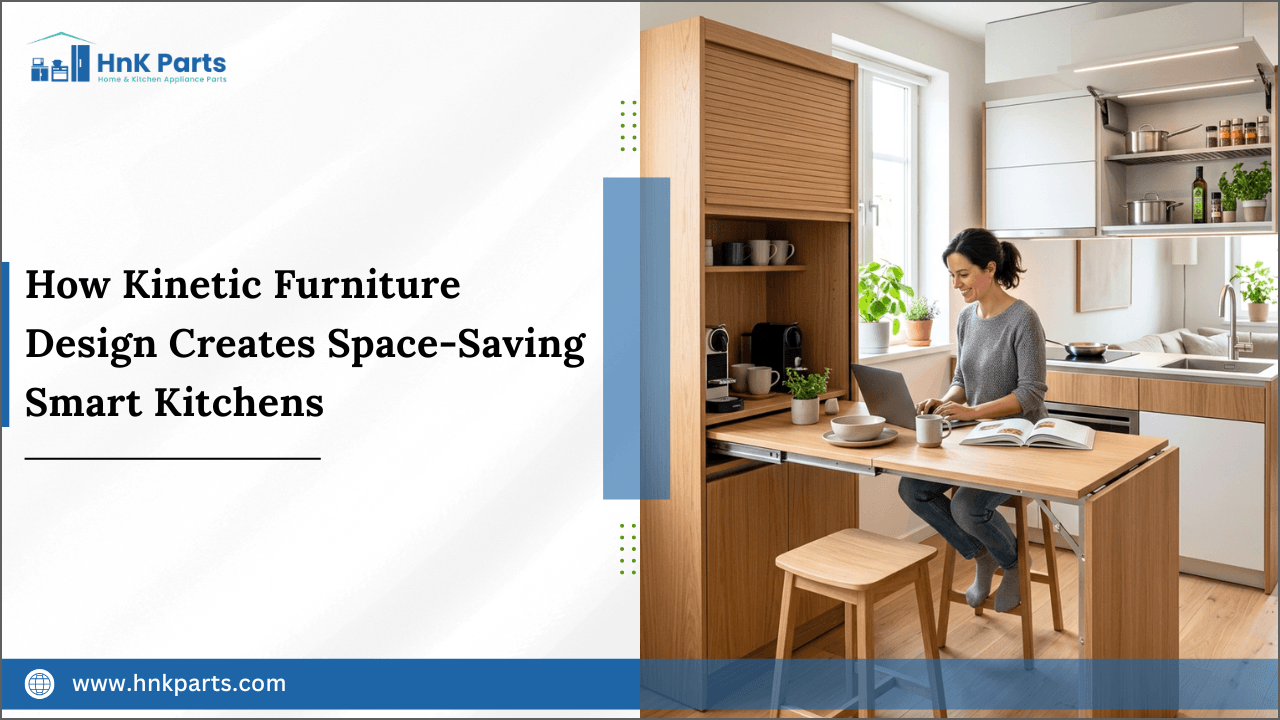
How Kinetic Furniture Design Creates Space-Saving Smart Kitchens
Modern homes, especially in cities, are becoming smaller, while expectations for comfort and functionality continue to rise. Kitchens are no longer just cooking areas; they now serve as spaces for dining, working, and social interaction. This has increased the demand for smarter, space-efficient solutions that maximize usability without expanding physical footprints.
Kinetic furniture design is emerging as a key innovation in this shift. By creating adaptable, movable, and multi-functional kitchen elements, it enables dynamic use of space. Research shows that smart kitchen systems can improve energy efficiency by around 10–15%, highlighting how adaptive design is shaping the future of compact, intelligent living environments.
What Is Kinetic Furniture Design and How It Transforms Modern Kitchen Spaces
Kinetic furniture design is rooted in adaptability. Instead of fixed structures that occupy constant space, kinetic elements can move, fold, slide, rotate, or retract. In kitchens, this means countertops that extend when needed, cabinets that disappear into walls, and dining tables that emerge from kitchen islands.
Unlike traditional modular furniture, kinetic systems are often engineered with precision mechanisms such as hydraulic lifts, sliding tracks, pivot joints, and motorized automation. Some are manually operated, while others are integrated with smart home systems for automated control.
In essence, kinetic design is about transforming a single space into multiple functional environments without increasing square footage. Smart refrigerators and IoT-based food management systems further enhance efficiency, reducing food waste by up to 60% through real-time monitoring of freshness and optimized usage patterns.
The Growing Problem of Space in Modern Kitchens
Space is becoming a significant constraint in modern kitchens due to smaller homes and compact layouts, creating challenges in storage and movement. Understanding the problem is important first.
Urban Homes: Urban housing trends show a steady reduction in apartment sizes across global cities, with many units typically ranging between 500–900 sq. ft. In such compact living spaces, kitchens are usually integrated into open-plan layouts, which makes efficient use of space essential.
To maintain basic usability and safety, standard kitchen design measurements are generally followed:
-
Standard kitchen countertop depth is approximately 600 mm.
-
Base kitchen aisle clearance ranges from 900–1200 mm minimum for safe movement.
-
Countertop height typically ranges between 850 and 900 mm for ergonomic use.
Despite these standards, compact urban kitchens face several practical limitations:
-
A large portion of wall space is occupied by fixed cabinetry in modular designs, reducing flexibility.
-
The standard 600 mm counter depth limits usable workspace for preparation and cooking.
-
Workflow efficiency is restricted due to lack of adaptable or expandable surfaces.
-
Zoning between cooking, prep, and storage areas is minimal, making multitasking difficult in small layouts.
Compact Living Environments: In studio apartments and compact homes, typically ranging between 300–500 sq. ft., kitchen areas are often limited to just 4–6 m². In such tightly designed layouts, spatial efficiency becomes a critical requirement, where every bit of space must serve multiple functions.
To maintain basic usability and safety, a few standard ergonomic guidelines are followed:
-
Minimum safe walkway clearance is 900 mm, with 1000–1200 mm recommended for comfort.
-
Standard modular cabinet depth remains fixed at 560–600 mm, limiting usable flexibility.
-
Appliance integration requires strict clearance zones, reducing usable layout options.
Despite these guidelines, compact kitchen environments face several major challenges:
-
Restricted movement due to narrow circulation paths
-
Lack of clear separation between cooking, dining, and living zones
-
Heavy reliance on multi-functional or convertible surfaces
-
Reduced storage efficiency caused by fixed modular cabinet systems
Overall Design Impact: Across both urban and compact environments, kitchens operate at near maximum spatial utilization levels. Fixed layouts limit adaptability, increase ergonomic inefficiencies, and even minor spatial losses significantly impact workflow performance and usability.
How Kinetic Furniture Design Solves Space Constraints in Modern Kitchens
Kinetic furniture design helps modern kitchens save space through movable, foldable, and reconfigurable elements. Instead of fixed layouts, the kitchen adapts to cooking, storage, or dining needs, allowing one space to serve multiple functions efficiently.
1. Foldable work surfaces: Countertops that typically provide around 0.8–1.2 m² of prep space can extend into additional cooking or dining areas when opened and then fold back to keep the kitchen open and uncluttered.
2. Sliding storage systems: Sliding systems such as pull-out pantry units, rotating shelves, and telescopic drawers are designed within cabinets that are typically 45–60 cm deep. These mechanisms ensure easy access to deep or corner storage areas without wasting space.
3. Multi-functional kitchen islands: Compact kitchen islands usually range between 1.2–2 meters in length. They combine cooking, storage, and seating into a single unit, effectively replacing multiple pieces of furniture in smaller kitchens.
4. Concealed appliance systems: Built-in appliances like ovens and microwaves are integrated into cabinetry panels, typically requiring 60–70 cm width per unit. This design keeps the kitchen visually clean while allowing it to shift between functional and minimal modes.
5. Convertible dining solutions: Foldable or pull-out dining tables offer 0.8–1.5 meters of extension space when in use. These solutions provide dining functionality only when needed, making them ideal for compact homes and studio layouts.
6. Vertical storage systems: Vertical storage maximizes height, with cabinets typically reaching 2.1–2.4 meters, while standard countertop height remains around 85–95 cm. This approach frees up floor space and keeps work areas more efficient.
7. Smart kinetic mechanisms: These systems include motorized sliders, sensor-based openings, and assisted lift mechanisms. Since they vary by technology and design, their dimensions depend on the specific system used, offering flexible and adaptive functionality.
Discover the top 7 innovative kitchen design trends for 2026 you can’t ignore as kitchens become smarter and more space-efficient.
How Kinetic Furniture Changes Daily Kitchen Experience
Kinetic furniture changes daily kitchen use by reshaping how space responds to cooking activity. Instead of a fixed layout, the kitchen adapts in real time, allowing users to work more naturally with less disruption to their routine while improving overall cooking comfort.
-
Task-based spatial shifting: The kitchen reconfigures based on activity, so prep, cooking, and cleaning happen in adjusted layouts without manual rearrangement. For example, a fold-out counter extends during chopping or baking and folds back once finished, keeping movement areas open and comfortable.
-
Reduced repetitive movement strain: Frequently used tools and surfaces shift closer to the user, minimizing back-and-forth movement. For example, a sliding utensil drawer moves next to the stove while cooking, reducing reaching and improving comfort.
-
Invisible transition zones: Storage, preparation, and dining areas blend into each other, allowing smooth switching between tasks without a visible setup change. For example, a dining surface hidden in the kitchen island pulls out instantly for easier cooking-to-eating transitions.
-
Adaptive clutter absorption: Temporary mess is contained within hidden or retractable sections, keeping the kitchen organized during cooking. For example, appliances like blenders slide into concealed cabinets, keeping countertops clear and reducing stress.
-
Parallel task enabling: Different kitchen functions can run at the same time without blocking each other, improving workflow in small spaces. For example, one surface is used for prep while another is used for plating, making multitasking easier.
-
Reduced mental effort during cooking: Since the layout adjusts automatically, users spend less time planning movement and focus more on cooking. For example, sensor-based cabinets open as the user approaches with ingredients, making cooking smoother and faster.
Summary: The Future of Smart Kitchens Driven by Kinetic Furniture Design
Kinetic furniture design is redefining smart kitchens by shifting them from static utility zones into responsive living systems that adapt in real time. Instead of just saving space, it changes how kitchen space is perceived, used, and experienced throughout the day. This evolution reflects a deeper transition toward homes that physically reconfigure themselves around human behavior.
Key Takeaways:
-
Kitchens are evolving from “fixed layouts” into time-based environments that change depending on activity cycles (cooking, working, socializing).
-
Kinetic systems reduce not just physical clutter, but also “visual and cognitive load,” making compact spaces feel larger and calmer.
-
Space efficiency is shifting from horizontal optimization to vertical + hidden motion-based design strategies.
-
Movement in furniture is becoming functional infrastructure, not just a design feature (e.g., transformation replaces expansion).
-
Future kitchen value will depend more on adaptability, speed, and transformation intelligence than on material or size.
-
Design is moving toward “invisible kitchens” that can fully disappear into living spaces when not in use
Wondering how to fix your kitchen appliance without replacing the whole unit? Fix it fast with high-quality home and kitchen appliance parts from HnK Parts. Discover replacement parts for stoves & ovens, dishwashers, refrigerators, washing machines, dryers, and TVs, all in one place. Enjoy great prices on trusted brands like GE, Whirlpool, Samsung, LG, and Bosch, delivered to your home.
References:
https://dl.acm.org/doi/10.1145/3772318.3793557
https://pmc.ncbi.nlm.nih.gov/articles/PMC9861016/
FAQs
Are these kitchens practical for daily cooking or just a design concept?
They are fully practical and designed for real, everyday use. The goal is to make small kitchens work more efficiently, not just look futuristic.
Is maintenance complicated compared to a normal kitchen?
It’s slightly more technical because of moving parts, but not overly complex. Basic periodic maintenance is usually enough to keep everything running smoothly.
Is this only for luxury homes, or will it become more common?
Right now, it’s more common in high-end homes due to cost and customization. But as technology becomes more accessible, it’s likely to become a mainstream solution for compact living.
Can kinetic furniture support heavy kitchen appliances?
Yes, they are engineered with load-bearing systems to handle appliances like ovens and dishwashers. Proper installation ensures stability and weight distribution.
| Disclaimer: This article is for informational purposes only and reflects general ideas about kinetic kitchen design in home environments. Actual suitability may vary depending on home layout, space conditions, and installation quality. |
-
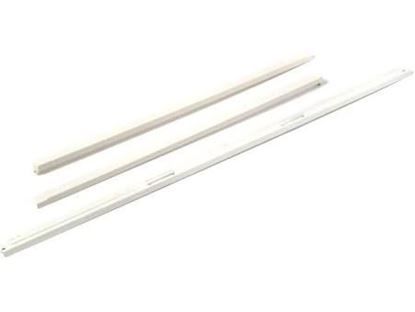 Whirlpool 8184860 Range Door TrimSpecial Price $67.05 Regular Price $93.82
 -
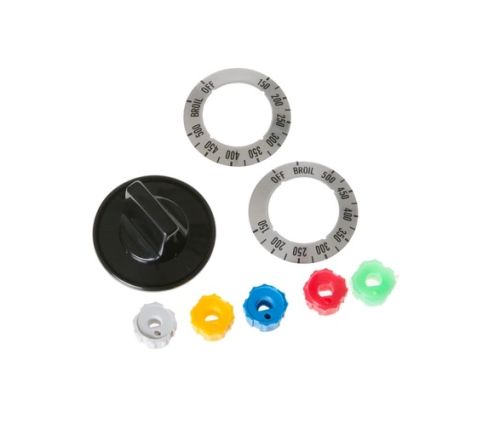 General Electric PM3X122 Range Universal Knob KitSpecial Price $20.00 Regular Price $24.95