How Digital Integration Is Changing Home Appliances in American Households
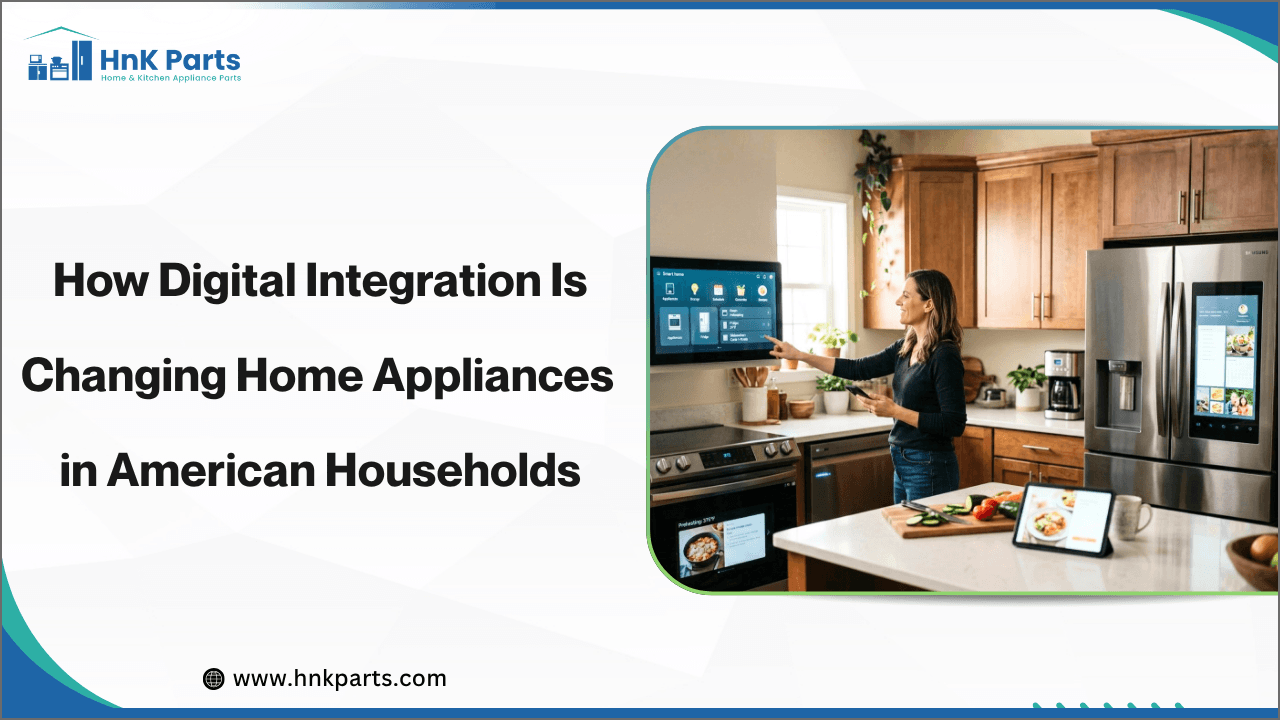
Digital integration is reshaping how American households interact with everyday appliances. Refrigerators, washing machines, air conditioners, ovens, and security systems are no longer standalone appliances. Instead, they function as interconnected systems that communicate via the internet, mobile applications, and artificial intelligence. This transformation is powered by the Internet of Things (IoT), cloud computing, and voice-enabled assistants.
In the United States, adoption is growing as consumers prioritize convenience, energy efficiency, remote control, and automation. This blog explores how digital integration is transforming home appliances, the technologies behind it, the benefits, challenges, and future direction.
Understanding Digital Integration in Home Appliances in American Households
Digital integration in modern American homes goes beyond basic internet connectivity. It includes appliances that exchange data, adjust to household routines, interact with utility systems, and support home management. As connected technologies advance, appliances are increasingly involved in daily household tasks. Here are the key aspects of digital integration:
-
Behavior-Based Adaptation: Some appliances analyze usage patterns and automatically adjust settings based on household routines. For example, smart thermostats connected through Google Home or Amazon Alexa can learn daily schedules and optimize temperature settings accordingly.
-
Utility Grid Interaction: Connected appliances respond to utility signals by shifting operation to off-peak hours, helping reduce energy usage.
-
Cross-Appliance Coordination: Multiple appliances communicate to complete tasks efficiently. Platforms such as Samsung SmartThings enable devices to operate within a shared system.
-
Predictive Maintenance Intelligence: Systems detect performance issues before failures occur, reducing breakdowns and extending appliance lifespan.
-
Remote Diagnostics Support: Service technicians can access appliance performance data remotely to speed up troubleshooting. For example, platforms such as LG ThinQ and GE SmartHQ support remote monitoring and diagnostic capabilities.
-
Personalized User Profiles: Appliances store user preferences and apply them automatically for different household members. Some ecosystems, such as Apple HomeKit, support personalized automation.
-
Integration with Home Ecosystems: Appliances function as part of a larger connected environment that includes security, lighting, climate control, and entertainment systems.
How Digital Integration in Home Appliances Has Evolved in the U.S.
The evolution of digital integration in U.S. home appliances reflects decades of technological advancement, from early home automation systems to today's AI-powered smart devices. As connectivity technologies have matured, appliances have become increasingly capable of communication, automation, and intelligent decision-making. The following outlines the major stages in this evolution:
Emergence of Home Automation Networks: The development of the X10 protocol in 1975 enabled electronic devices to communicate through a home's electrical wiring. By 1978, X10 products were available in retail stores, introducing home automation technology to consumers.
Growth of Digital Controls and Internet Connectivity Manufacturers replaced mechanical dials with electronic controls, digital displays, and programmable settings, improving accuracy and usability. During this period, rising broadband adoption also led to the development of connected appliances with remote monitoring and data transmission capabilities.
Rise of Smartphone Control and IoT Integration The widespread adoption of smartphones and IoT technology enabled homeowners to monitor appliance status, receive notifications, adjust settings via mobile apps, and connect appliances with other smart home devices and automation systems.
The U.S. smart home appliance industry was valued at 8.0 USD billion in 2024 and reached an estimated 9.26 USD billion in 2025. It is projected to grow further to 40.0 USD billion by 2035, registering a CAGR of around 15.7% during the 2025–2035 period.
Explore the future of home automation: voice control systems to understand how voice-enabled technology is transforming modern homes.
Core Technologies Driving Digital Integration in U.S. Households
Digital integration in American households incorporates technologies that enable appliances to connect, communicate, automate functions, and respond to user preferences. These technologies form the foundation of modern smart appliances, allowing homeowners to manage household operations more efficiently and conveniently. Here are the core technologies driving digital integration:
|
Core Technology |
Primary Function |
Everyday Household Example |
|
Internet of Things (IoT) & Smart Sensors |
Links physical hardware to home networks and monitors environmental data. |
Washing machines detect fabric weight to automatically adjust water and detergent levels. |
|
Artificial Intelligence & Predictive Analytics |
Learns family behavioral patterns to optimize appliance performance and forecast failures. |
A smart thermostat adjusting temperatures based on daily routines; appliances detecting faults before breakdowns. |
|
Edge Computing |
Processes critical data locally on the device for instant response. |
A smart oven using built-in sensors to recognize food and adjust cooking settings without internet delay. |
|
Cloud Computing |
Stores and manages large data sets through the internet. |
Smartphone apps showing real-time appliance status or grocery inventory while away from home. |
|
Unified Protocols (Matter & Thread) |
Enables cross-brand device compatibility and communication. |
Controlling LG, Samsung, and GE devices through a single platform like Apple Home or Amazon Alexa. |
|
Voice Recognition Interface |
Provides hands-free control using spoken commands. |
Asking a smart speaker to preheat the oven or pause the dishwasher. |
|
Over-the-Air (OTA) Updates |
Delivers remote software updates and security patches. |
Appliances receiving new features or energy-efficiency updates via Wi-Fi. |
Find out how dual-purpose kitchen appliances save time and money by improving efficiency and reducing costs in modern kitchens.
Challenges Associated With the Digital Integration of Home Appliances
Digital integration improves convenience in American households but also brings challenges that require effective solutions for a secure and user-friendly smart home experience. Below are the key challenges and potential solutions:
Challenge: Cybersecurity Risks
Connected appliances may be vulnerable to hacking, malware, or unauthorized access.
Solution: Regular software updates, strong passwords, and multi-factor authentication can improve security.
Challenge: Data Privacy Concerns
Smart appliances often collect usage data that may raise privacy concerns.
Solution: Data encryption, privacy controls, and transparent data-handling policies can help protect user information.
Challenge: Internet Connectivity Dependence
Many smart features rely on stable internet access and may be affected by network outages.
Solution: Offline operating modes can ensure that essential appliance functions remain available.
Challenge: Technology Obsolescence
Rapid innovation can cause connected features or platforms to become outdated over time.
Solution: Long-term software support and upgrade options can help extend product relevance.
Understanding these challenges helps homeowners make informed purchasing decisions.
The Future of Digital Integration in Smart Appliances Across American Households
Digital integration is transforming how American households use home appliances by connecting them through smart technologies, automation, and data-driven controls. From refrigerators and laundry systems to HVAC equipment and cooking appliances, connected devices are improving convenience, energy efficiency, household management, and overall day-to-day living experiences.
Key Takeaways
- Smart appliances use connectivity, sensors, and automation to improve convenience and performance.
- Digital integration enables remote monitoring and control through mobile applications.
- Predictive maintenance features help identify problems before major failures occur.
- Energy-monitoring capabilities support lower utility costs and improved efficiency.
- AI technology is allowing appliances to adapt to household usage patterns automatically.
- Connected home ecosystems are creating seamless communication between multiple devices.
Looking to upgrade your kitchen appliance performance? Shop premium home and kitchen appliances parts for refrigerators, dishwashers, ovens, washers, and dryers from trusted brands like Samsung, Whirlpool, LG, Bosch, and GE at HnK Parts. Enjoy competitive prices, dependable parts quality, and fast shipping.
References:
https://www.iea.org/data-and-statistics/charts/household-adoption-rates-of-digital-technologies-in-the-united-states
https://hbr.org/2025/09/how-digital-integration-is-reconfiguring-value-chains
https://pmc.ncbi.nlm.nih.gov/articles/PMC11743688/
https://www.marketresearchfuture.com/reports/us-smart-home-appliances-market-14193
FAQs
How is digital integration improving daily life in American households?
In American households, digital integration is improving daily life by making home management more convenient and efficient. Homeowners can control appliances remotely, automate routines, and monitor energy use, which saves time and simplifies everyday tasks.
How does digital integration affect energy consumption in American homes?
Digital integration in American homes helps reduce energy consumption by optimizing how appliances operate. Smart thermostats, washers, and HVAC systems adjust automatically based on usage patterns, occupancy, and efficiency settings, reducing unnecessary energy waste.
Is digital integration in home appliances expensive for American households?
Yes, digitally integrated appliances in American households often have a higher upfront cost compared to traditional appliances. However, many homeowners consider it a long-term investment due to energy savings, automation benefits, and reduced maintenance costs over time.
| Disclaimer: This article is intended for general informational and educational purposes only. The features, benefits, and performance of digitally integrated home appliances may vary depending on software updates, internet connectivity, and household usage conditions. |
-
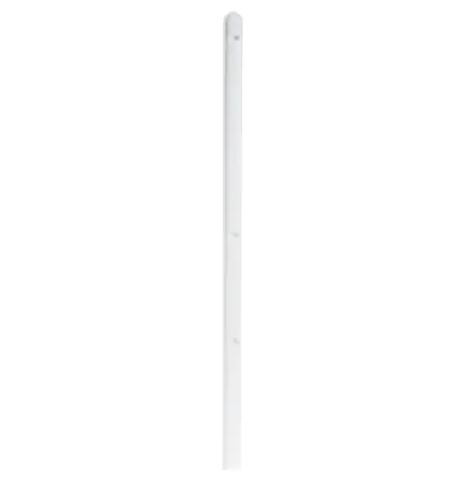 General Electric WR12X10106 Refrigerator Handle TailSpecial Price $55.50 Regular Price $59.95
 -
 General Electric WR13X10020 Refrigerator Lower Door Hinge KitSpecial Price $26.25 Regular Price $36.75
 -
 General Electric WR17X2891 Refrigerator Plastic Tubing 6' X 5/16" ODSpecial Price $22.70 Regular Price $23.82
 -
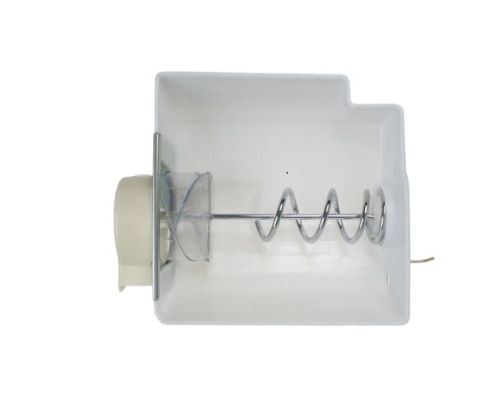 General Electric WR17X4312 Refrigerator Ice Bucket & Auger AssemblySpecial Price $241.97 Regular Price $337.12
 -
 General Electric WR2X8245 Refrigerator Rear WheelSpecial Price $26.92 Regular Price $45.95