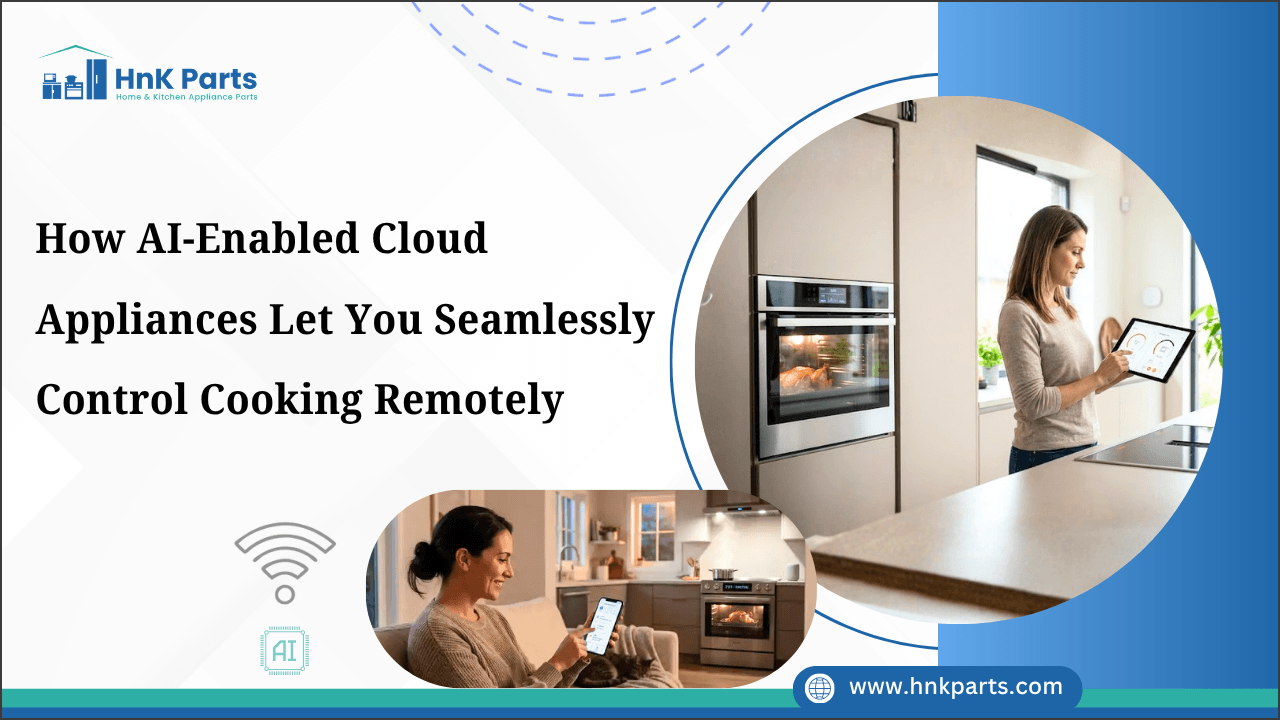
How AI-Enabled Cloud Appliances Let You Seamlessly Control Cooking Remotely
Imagine coming home to a perfectly roasted dinner, only to realize you never stepped into the kitchen. For most home cooks, “remote cooking” still means burned food or frustrating app connectivity errors. It’s disappointing when expensive smart appliances fail right when you rely on them most. But a major shift is underway. AI-enabled cloud appliances are finally delivering true automation. In this guide, you’ll discover how cloud-based machine learning eliminates “dinner anxiety,” ensuring your meals are cooked with consistent, professional-level precision from anywhere in the world.
What Are AI-Enabled Cloud Appliances and How Do They Work for Remote Cooking
AI-enabled cloud appliances represent a major evolution beyond basic Wi-Fi-connected devices, shifting from simple remote triggers to autonomous systems that think, learn, and adapt. Instead of acting as simple remote triggers, they function as autonomous systems that think, learn, and adapt in real time.
Unlike traditional smart appliances that follow fixed user-programmed settings, these systems combine advanced hardware with cloud intelligence to manage the cooking process independently and in real time. At their core, these appliances combine advanced hardware with cloud intelligence to manage cooking independently rather than relying on fixed user inputs.
Core Components and Mechanisms: These appliances operate through three tightly integrated layers that enable seamless remote cooking control:
-
Advanced Internal Sensors: Modern ovens and multi-cookers are equipped with high-resolution cameras and precision sensors that go beyond temperature tracking. They monitor humidity, food density, and even surface browning (Maillard reaction) in real time to assess cooking progress accurately.
-
Neural Network Intelligence: Sensor data is continuously transmitted to cloud-based neural networks, where it is analyzed at frequent intervals. For instance, premium systems can update “time-to-done” predictions every few seconds while dynamically adjusting heat levels for optimal results.
-
Edge-to-Cloud Connectivity: While basic processing happens on the appliance itself (edge computing), more complex decisions—such as identifying food types or adjusting recipes based on environmental factors like altitude—are handled by cloud servers for greater precision.
How Remote Cooking Works in Practice
Using an AI-enabled appliance remotely is not just about controlling settings—it initiates a fully automated cooking workflow:
-
Autonomous Recognition: When food is placed inside, built-in cameras use computer vision to identify ingredients—such as detecting a raw chicken breast—and automatically recommend the ideal cooking mode.
-
Dynamic Adjustments: If the system detects that food is cooking faster or slower due to variations like moisture levels, it instantly adjusts temperature, timing, or cooking mode without requiring user intervention.
-
Predictive Notifications: Instead of basic timer alerts, these appliances provide intelligent updates such as “Your meal will be ready in 12 minutes” and can warn you about potential issues like temperature fluctuations or unattended cooking elements.
In essence, AI-enabled cloud appliances transform remote cooking into an intelligent, self-optimizing process—delivering consistent, high-quality results with minimal effort.
Eliminating Dinner Anxiety by Understanding Why Traditional Smart Kitchen Appliances Fail at Remote Cooking Control
The “smart kitchen” promised convenience and control, but for many users, it introduced a new layer of stress. Understanding why first-generation smart appliances fall short is essential to overcoming frustration and achieving truly reliable remote cooking.
The “Babysitting” Problem: Traditional smart appliances function more like remote controls with apps than intelligent systems. They allow basic actions, such as turning an oven on or off, but lack awareness of what’s actually happening inside.
-
The Anxiety Factor: You find yourself constantly checking your phone, wondering if the food is burning or if the connection has dropped.
-
The Core Limitation: If a recipe requires mid-cycle adjustments, you must manually intervene. There is no true “set it and forget it” capability because the system cannot adapt on its own.
Connectivity Issues and Notification Overload: Most traditional smart systems depend on a direct and often unstable connection between your smartphone and the appliance.
-
Lag and Latency: Delays in communication can mean your “Stop” command reaches the appliance too late, increasing the risk of overcooking.
-
Notification Fatigue: Frequent, low-value alerts—such as basic status updates—can overwhelm users, leading them to ignore important notifications when they actually matter.
Lack of Environmental Awareness: Standard smart appliances rely on fixed timers and limited sensor input, which prevents them from adjusting to real cooking conditions. They fail to account for:
-
Food Weight and Density: A larger cut of meat requires different cooking parameters than a smaller one, yet both are treated the same.
-
Initial Food Temperature: Whether food is frozen or at room temperature significantly impacts cooking time, but traditional systems don’t adapt.
-
Moisture Levels: Without advanced sensing, appliances cannot detect when food is drying out, resulting in meals that are technically “on time” but overcooked.
AI Cloud Appliances vs Traditional Smart Appliances with 3 Key Differences in Remote Cooking Control
The transition from traditional smart appliances to AI-enabled cloud systems represents a fundamental shift from manual control to intelligent automation. The table below clearly outlines the three key differences that define remote cooking performance in 2026:
Comparison Table: AI Cloud vs Traditional Smart Appliances
|
Feature |
Traditional Smart Appliances |
AI-Enabled Cloud Appliances |
|
Decision-Making |
Operates on a linear command structure (e.g., set temperature and timer). No adaptability if conditions change. |
Uses closed-loop feedback. Continuously analyzes sensor data and autonomously adjusts heat, timing, and cooking modes. |
|
User Interaction |
Requires frequent manual intervention (“check and adjust” approach). |
Minimal intervention needed. Functions as an intelligent, self-adjusting system. |
|
Connectivity |
Dependent on local Wi-Fi. Loss of connection results in loss of control and visibility. |
Persistent cloud synchronization ensures continuous operation even during temporary connectivity loss. |
|
Data Processing |
Limited to on-device processing with no learning capability. |
Cloud-based processing with AI models trained on large cooking datasets for improved accuracy. |
|
Sensor Capability |
Basic thermostats measuring air temperature only. |
Advanced sensors + computer vision detect food type, moisture, browning, and cooking progress. |
|
Cooking Accuracy |
Relies on fixed timers, leading to inconsistent results. |
Dynamic adjustments ensure consistent, high-quality cooking outcomes. |
|
Notifications |
Generic alerts (e.g., preheating, timer end). |
Predictive alerts with real-time updates and smart recommendations. |
AI-enabled cloud appliances go beyond simple remote control by introducing intelligence, adaptability, and predictive precision, making them far more reliable and efficient for modern remote cooking needs.
Predictive Precision and the 2026 Trend of Autonomous Culinary Sensors in Remote Cooking Systems
In 2026, the kitchen has shifted from “connected” to autonomous. The defining trend is predictive precision, powered by a new generation of culinary sensors that don’t just monitor—they anticipate.
Beyond the Thermometer: The Rise of Multi-Spectral Sensors
While traditional smart ovens measured ambient air, 2026 systems use multi-spectral and ultrasonic sensors that can “see” through steam and crust to measure the internal molecular structure of food.
-
Acoustic Sensing: High-end appliances now use sound waves to detect the exact moment a liquid reaches a simmer or when a protein’s fibers begin to break down, sending a “Doneness Probability” score directly to your device.
-
Olfactory Digitalization: Experimental “e-nose” sensors detect chemical compounds released during browning. If the AI identifies signs of burning before visible smoke appears, it automatically cuts power and sends an alert.
Predictive vs Reactive Control: The true innovation in 2026 remote cooking lies in the concept of the Predictive Buffer.
-
Traffic-Aware Cooking: Integrated with your GPS and calendar, AI-enabled appliances can recognize delays such as being stuck in traffic. Instead of maintaining a fixed cooking cycle, the system dynamically adjusts the thermal curve to slow the process, ensuring your meal is ready at the exact moment you arrive.
-
End-State Cooking: Rather than setting temperature and time, users define the desired outcome—such as “crispy skin with a juicy interior.” Autonomous sensors then manage transitions between cooking modes like steam, convection, and broil based on real-time feedback instead of static instructions.
The Trend Toward Invisible Interaction: User interaction is also evolving. The focus in 2026 is shifting away from screens toward more seamless, non-intrusive communication.
-
Haptic Feedback: Devices like smartwatches deliver specific vibration patterns to indicate cooking stages, such as when searing begins.
-
Voice Integration: Voice assistants provide real-time updates without requiring manual checks.
This shift allows users to stay fully engaged in their daily routines while AI systems handle cooking with precision in the background.
Explore from smart assistants to intelligent homes: voice control systems powering home automation in 2026, highlighting how voice control enhances automation, connectivity, and everyday convenience in modern homes.
Summary: How to Choose and Set Up Your AI-Enabled Kitchen with a 5-Step Checklist
AI-enabled cloud appliances are transforming kitchens from simple remote-control setups into autonomous, predictive systems. By using real-time sensor data and cloud-based intelligence, they continuously adjust cooking conditions for optimal results. These systems eliminate “dinner anxiety” by adapting to variables like moisture and timing automatically. In 2026, advanced sensing and ecosystem integration make cooking more precise, seamless, and reliable from anywhere.
Key Takeaways
-
Autonomy over remote control means AI appliances use closed-loop feedback to make real-time cooking adjustments without user intervention.
-
Predictive precision enables advanced sensors to detect browning and early signs of burning for proactive corrections.
-
Contextual awareness allows systems to sync with GPS and calendars to adjust cooking based on your schedule.
-
End of Babysitting ensures AI appliances manage cooking independently with fail-safe protocols and minimal supervision.
-
Strategic setup matters highlight that stable connectivity and neural vision are essential for accurate, consistent results.
Keep your kitchen running at peak performance with HnK Parts, your trusted source for high-quality home appliance parts. From ovens and refrigerators to advanced AI-enabled appliances, we provide reliable, durable components that ensure efficiency and long-term performance. Whether you're upgrading your smart kitchen or replacing essential parts, we deliver precision, affordability, and fast solutions you can depend on.
References:
https://signicent.com/smart-cooking-appliances/
https://www.datainsightsmarket.com/reports/smart-bluetooth-meat-thermometer-423917
FAQs
Can I control my oven remotely if my home Wi-Fi goes out?
Most AI-enabled cloud appliances require connectivity for advanced features, but many 2026 models include Edge AI, allowing the appliance to safely complete the current cooking cycle using local processing if the cloud connection is lost.
Are AI-enabled appliances safe to leave unattended?
Yes, AI systems are designed with advanced safety features like Thermal Runaway Protection, which detects abnormal temperature spikes or flare-ups and can automatically cut power while sending alerts.
Do AI-enabled cloud appliances require a subscription?
Basic remote control features are typically free, but some premium brands offer subscription plans for advanced culinary intelligence, including specialized cooking algorithms and enhanced automation.
| Disclaimer: This content is for informational purposes only and reflects general trends in AI-enabled kitchen appliances as of 2026. Features, performance, and availability may vary by brand and model. |
-
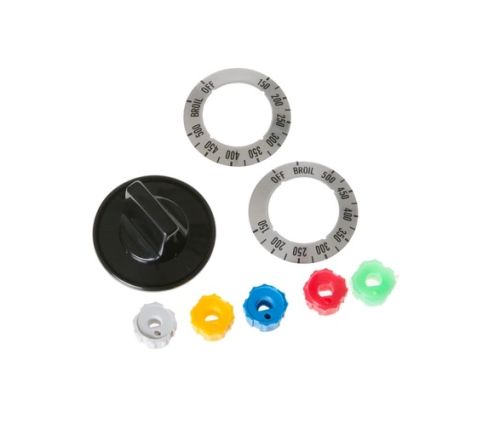 General Electric PM3X122 Range Universal Knob KitSpecial Price $20.00 Regular Price $24.95
 -
 General Electric WB03K10034 Range White Burner KnobSpecial Price $20.59 Regular Price $23.74
 -
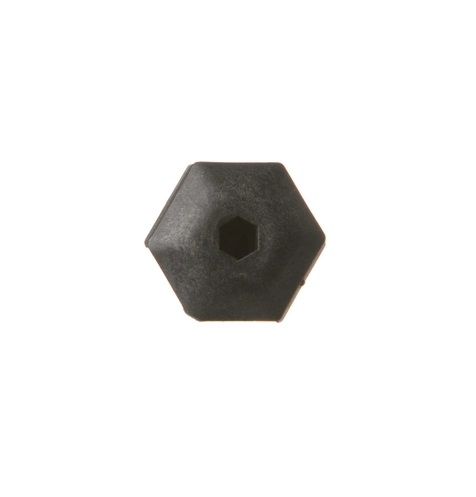 General Electric WB02X10521 Range Leveling LegSpecial Price $13.96 Regular Price $15.45