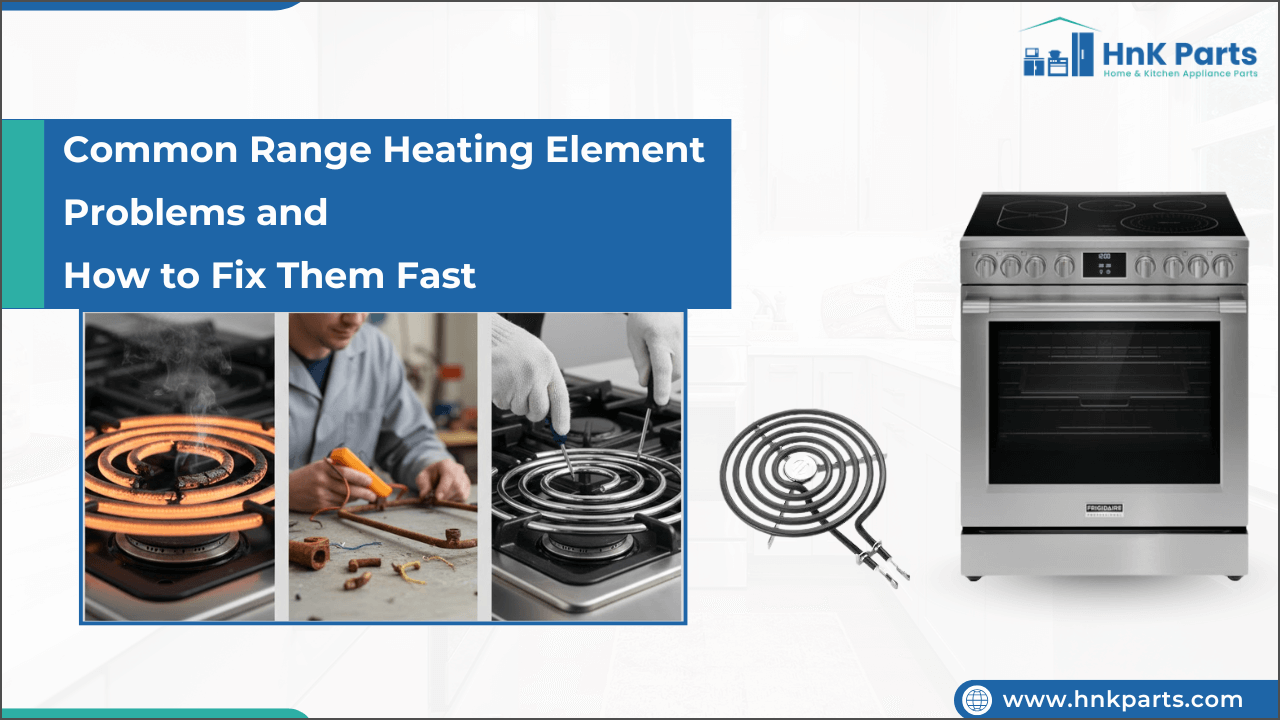
Common Range Heating Element Problems and How to Fix Them Fast
A range that fails to heat properly can disrupt daily cooking routines, increase energy consumption, and raise safety concerns in both residential and light commercial kitchens. At the center of many heating issues is the range heating element, the component responsible for converting electrical energy into consistent, controlled heat. When this element underperforms or fails, the entire appliance can become unreliable.
This comprehensive guide explains how an electric range heating element works, outlines the most frequent electric range heating element problems, identifies the root causes of failures, and provides practical guidance on fixing issues quickly and safely. Whether you are troubleshooting a heating element not working in range scenarios or planning an electric range heating element replacement, this article is designed to help you act with confidence and accuracy.
| Table of Contents: Understanding How a Range Heating Element Works Most Common Range Heating Element Problems What Causes Range Heating Element Failures How to Fix Range Heating Element Problems Fast |
Understanding How a Range Heating Element Works
A range heating element is engineered to convert electrical energy into controlled, consistent heat for cooking. Proper operation is essential for accurate temperatures, even heat distribution, and reliable range performance. Below is a clear breakdown of how the system functions:
-
High-Resistance Element Construction: An electric range heating element is made from high-resistance metal alloys, commonly nickel-chromium, designed to tolerate extreme heat while maintaining electrical stability over repeated heating cycles.
-
Electrical Power Conversion to Heat: When power flows from the range’s control board or infinite switch to the heating element, electrical resistance converts that energy into heat. As current passes through the internal conductor, the element heats up and glows red, producing usable cooking heat.
-
Multiple Heating Elements Within One Range: Most electric ranges use more than one heating element to support different cooking functions, including surface elements for stovetop cooking, a bake heating element positioned at the bottom of the oven, and a broil element located at the top of the oven cavity.
-
Heat Transfer to Cookware or Oven Cavity: Once energized, the heating element transfers heat directly to cookware on the surface or radiates heat throughout the oven cavity, depending on its location and function.
-
Continuous Thermal and Electrical Stress: Because heating elements operate under constant high temperatures and electrical load, gradual wear is normal over time. This stress explains why electric range heating element problems eventually develop with regular use.
Understanding how a range heating element works provides a solid foundation for diagnosing performance issues accurately and determining whether repair or replacement is required.
Looking for reliable, high-quality appliance replacement parts? At HnK Parts, we offer home and kitchen repair parts designed to restore performance and extend the life of your appliances. Our extensive inventory covers a wide range of range and oven parts, including bake elements, broil elements, surface burners, burner caps, burner heads, gas igniters, spark modules from top-selling brands like Frigidaire, Samsung, Bertazzoni, Avanti Products, General Electric & more.
Most Common Range Heating Element Problems
Several recurring issues account for the majority of service calls related to range heating failures. Recognizing the symptoms helps pinpoint whether the range heating element itself is at fault or if a supporting component has failed.
1. Heating Element Not Heating at All: A heating element not working in range situations often indicate a burned-out element, broken internal conductor, or loss of electrical continuity. Visually, the element may appear cracked, blistered, or completely dark when powered on.
2. Uneven or Inconsistent Heating: When food cooks unevenly, the electric range heating element may be partially damaged. Internal breaks can allow some sections to heat while others remain cool, leading to hot spots and poor cooking results.
3. Slow Heat-Up Time: If the range takes noticeably longer to reach temperature, the element may be degrading internally. Resistance increases with age, reducing heat output while still drawing power.
4. Element Cycles On and Off Erratically: Frequent cycling can signal compatibility issues, loose wiring, or a failing temperature sensor. While the element itself may not be completely defective, the problem still falls under broader electric range heating element problems.
5. Visible Sparks or Burning Smell: Sparking, arcing, or a strong electrical odor should be addressed immediately. These symptoms often indicate exposed wiring, internal shorts, or terminal damage connected to the range parts.
What Causes Range Heating Element Failures
Heating element failures rarely occur without an underlying cause. Understanding these contributing factors helps prevent repeated breakdowns after repair or electric range heating element replacement.
|
Cause |
How It Happens |
Effect on Element |
|
Electrical Surges and Voltage Irregularities |
Power fluctuations stress the element’s resistance wire. |
Repeated surges weaken the conductor, leading to premature burnout. |
|
Mechanical Stress and Thermal Cycling |
Heating elements expand when hot and contract when cool. |
Constant thermal cycling fatigues the metal, causing internal fractures. |
|
Spills and Moisture Intrusion |
Food spills or trapped moisture under smooth-top elements. |
Corrosion and accelerated element failure. |
|
Improper Cookware and Overloading |
Using oversized or uneven cookware concentrates heat unevenly. |
Localized overheating shortens element lifespan. |
|
Faulty Controls or Wiring |
Defective switches, relays, or loose wiring send inconsistent current. |
Overheating and eventual element failure. |
How to Fix Range Heating Element Problems Fast
Addressing range heating issues promptly minimizes downtime and prevents secondary damage to controls or wiring. The following steps outline a practical approach to diagnosing and fixing problems efficiently.
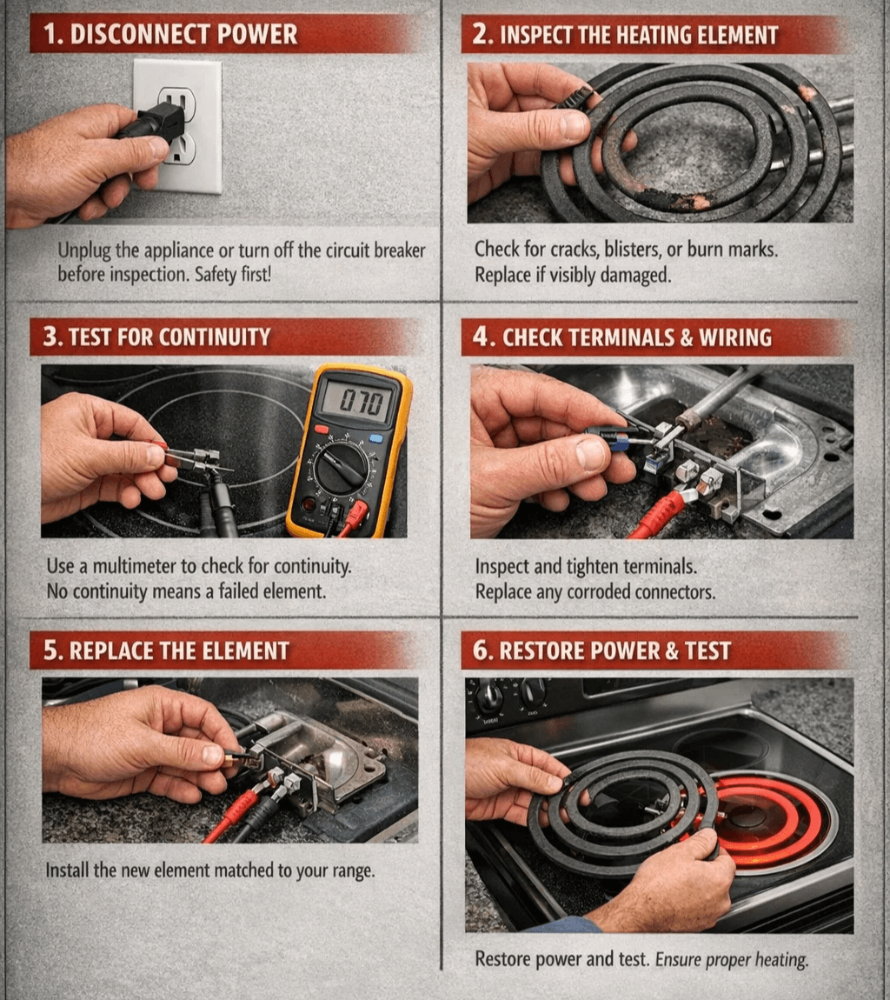
Explore clear, step-by-step guidance on how to replace range heating element: a quick & dependable guide to safely identify a faulty element and complete a reliable replacement with confidence.
Conclusion: Preventing Future Range Heating Element Problems
Understanding that a range heating element is a wear component helps set realistic expectations for its lifespan and maintenance needs. While eventual replacement is unavoidable, many failures can be delayed through proper use, routine inspection, and timely corrective action. Simple habits such as preventing spills, using correctly sized cookware, and addressing electrical irregularities early play a critical role in preserving element performance.
Key Takeaway Points
-
Proper daily use, including spill prevention and matching cookware to burner size, significantly reduces stress on the range heating element.
-
Regular inspections of wiring, terminals, and element surfaces help identify early signs of wear before they lead to complete failure.
-
Prompt response to symptoms such as uneven heating or delayed heat-up minimizes repair costs and prevents secondary damage.
-
Understanding how a range heating element functions enables faster, more accurate troubleshooting when problems arise.
-
Selecting the correct electric range heating element replacement ensures consistent heating performance, safe operation, and long-term reliability.
FAQs
How do I replace my LG range heating element?
Disconnect power, remove the mounting hardware inside the oven, carefully pull the old element forward, transfer the wiring to the new element, and reinstall it securely. Always verify compatibility with your specific LG model.
Do Whirlpool convection ranges have a bottom heating element?
Yes, most Whirlpool convection ranges include a bottom bake heating element that provides consistent heat for baking and roasting. In some newer or hidden-bake models, the bottom element may be concealed under the oven floor but still functions the same
-
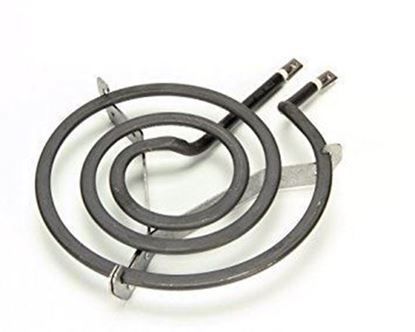 Bertazzoni 506272 Range Commercial Heating ElementSpecial Price $1.96 Regular Price $2.00
 -
 General Electric WB44K10015 Range Bottom Heating ElementSpecial Price $75.00 Regular Price $100.55
 -
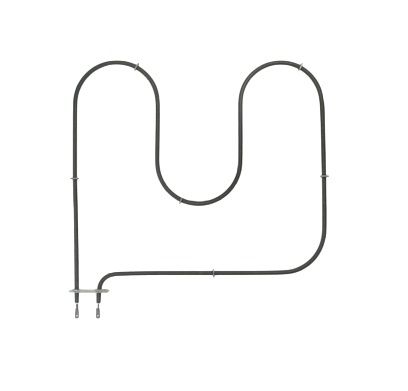 General Electric WB44K10011 Range Heating ElementSpecial Price $68.53 Regular Price $90.90
 -
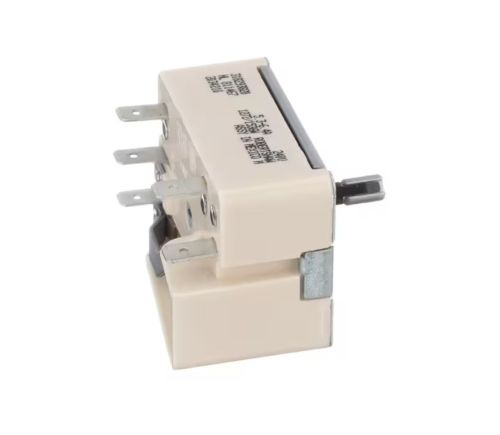 Frigidaire 318293820 Range Surface Heating Element Switch-SmallSpecial Price $57.24 Regular Price $65.95
 -
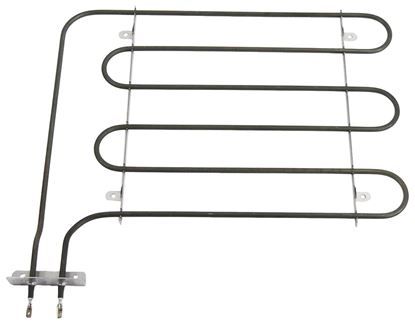 General Electric WB44K10014 Range Heating Element TopSpecial Price $75.00 Regular Price $104.00