The store will not work correctly in the case when cookies are disabled.
We collect user information to provide a better user experience and protect the security of our website. By continuing to use our website, you acknowledge the use of cookies.
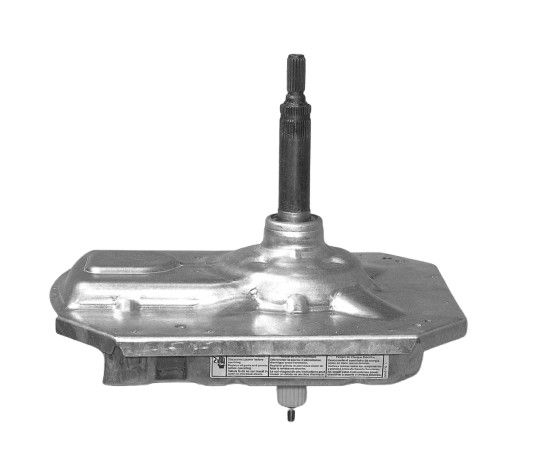
The Whirlpool W11454372 Washer Gear Case is used to transmit the motor’s power to the washer drum. It operates through the conversion of the rotational energy from the motor into the right force required to turn the drum for washing. In this capacity, the gear case contribute to a smooth and regular movement, which in turn decreases the friction on other components. It also ensures that the washer does not develop mechanical problems and also reduces the level of noise produced when in use.
Transfers mechanical power from the washer drive system to the wash mechanism and basket. The Whirlpool W11454372 Washer Gear Case is a mechanical transmission component designed for select Whirlpool washing machines. It provides the controlled mechanical output required for agitator movement and basket rotation during washer operation.
Mechanical Agitation:
Motor-driven rotation enters the gear case and passes through its internal transmission mechanism, producing the mechanical output required for agitator movement during the wash portion of the cycle. The transmission controls the delivered rotational force so the connected wash mechanism can perform its designated movement.
Wash and Spin Operation:
During the wash stage, the gear case delivers mechanical output for agitator movement; during the spin stage, it transfers drive to rotate the wash basket. This change in mechanical output allows the transmission assembly to provide the distinct movement required for washing and spinning.
Replacement Guidelines:
Replacement may be appropriate when the Whirlpool W11454372 Washer Gear Case can no longer transfer mechanical power as intended to the washer's agitator and basket. Abnormal noise, failure to agitate, spinning problems, internal wear, or mechanical damage may indicate that the gear case is no longer providing the required transmission function during wash and spin operation.
Common Failure Symptoms:
Unusual or excessive operating noise.
Washer does not agitate.
Washer has spinning problems.
Abnormal basket movement during the spin stage.
Mechanical operation differs from the selected washer cycle.
Equipment Compatibility:
The Whirlpool W11454372 Washer Gear Case is designed for select Whirlpool washing machine models. Always verify the appliance model number and original part number against the manufacturer's documentation before purchasing. Where applicable, compare superseded or replacement part numbers to confirm the correct application.
What maintenance is required for the Whirlpool W11454372 Gear Case?
Regularly inspect the gear case for leaks, cracks, or worn seals. Keep the surrounding area clean and avoid overloading the washer to prevent strain. Lubricate moving parts if specified in the service manual, and always disconnect power before servicing.
What are common issues with the Whirlpool W11454372 Gear Case?
Washer produces grinding noise.
Spin speed drops under heavy loads.
Drum movement becomes jerky.
Oil residue appears near the transmission area.
Why does the Whirlpool W11454372 use a gear case instead of a direct motor-to-basket drive?
The gear case provides a controlled transmission between the washer drive motor and the moving wash components. This allows the mechanical output to be adapted for the different movement requirements of the wash and spin portions of the cycle.
What mechanical parts are associated with a washer gear case?
A gear case incorporates internal transmission elements that work together to transfer rotational force between the washer drive system and the connected moving assemblies. The specific internal construction depends on the transmission design used for the applicable washer.
Why can the same gear case support different washer movement patterns?
The transmission mechanism can deliver mechanical output suited to different operating phases of the washer. This enables the connected mechanism to perform the movement required during agitation and the basket rotation required during spinning.
What makes a washer gear case different from a simple pulley or drive coupling?
A pulley or coupling primarily transfers rotational force between connected components, while a gear case contains a transmission mechanism that manages how that mechanical force is delivered to the washer's moving assemblies.
What should be checked before selecting a washer gear case?
The complete washer model number and existing gear case information should be compared with the applicable parts documentation to confirm the correct gear case assembly for the appliance.
Installation Steps
Step 1: Power should be disconnected. Prior to initiating any repair or maintenance, it should ensure that the power supply to the appliance is disconnected to maintain a safe working environment.
Step 2: The Necessary Tools should be gathered. Similar to any task, the appropriate tools are considered crucial. A Phillips-head screwdriver along with a crescent wrench or socket set will be required to begin.
Step 3: The Washer Top should be taken off. The Phillips-head screwdriver should be employed to take out the screws located around the edges of the washer's top. If the screws are difficult to remove, a light lubricant should be applied to assist in loosening them.
Step 4: Wire Harnesses should be disconnected. After the washer top has been removed, all of the wire harnesses should be disconnected from their designated connectors.
Step 5: The Gearcase should be taken out. Your crescent wrench or socket set should be utilized to loosen and extract all screws securing the gearcase. After all screws are extracted, the gearcase may be slid out of position.
Step 6: New Gearcase Assembly should be placed. The new gearcase assembly should be positioned into place and all screws should be fastened individually.
Step 7: Wire Harnesses should be reconnected. All wire harnesses should be reconnected to their appropriate connectors.
Step 8: Washer Top should be replaced. The washer top should be repositioned onto the unit and the screws should be secured using your Phillips-head screwdriver.
Step 9: Power should be restored. After finishing the task, the power should be restored and the unit should be tested to confirm it operates properly.
Please note that these instructions are served as general guidance and should always be referenced alongside the manufacturer's manual, if accessible.