The store will not work correctly in the case when cookies are disabled.
We collect user information to provide a better user experience and protect the security of our website. By continuing to use our website, you acknowledge the use of cookies.
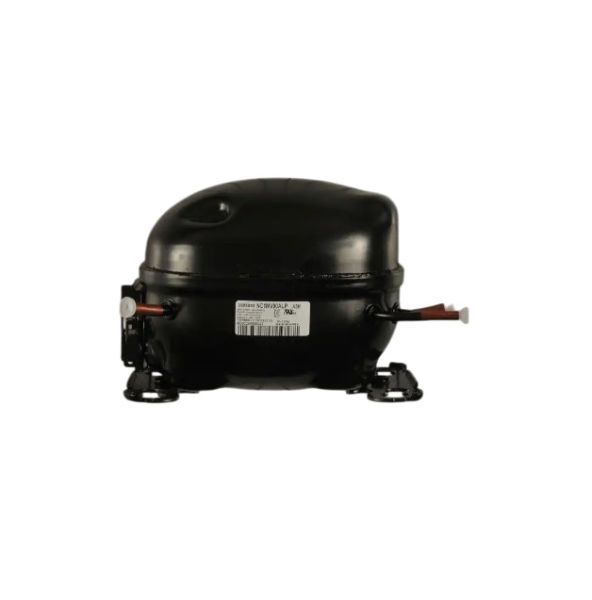
The Samsung NC1MV90ALP/ASH Refrigerator Compressor circulates refrigerant gas to a suitable pressure to allow heat exchange within a cooilng system. It works by pulling in low-pressure R134A refrigerant, compressing it in a high pressure state and sending it through the condenser to shed heat. With this compressor, it is compatible with Samsung refrigerators to ensure optimal cooling performance thereby maintaining a constant internal temperature.
What maintenance is required for the Samsung NC1MV90ALP/ASH Compressor?
Keep the condenser coils and surrounding area free of dust and debris to maintain efficient heat exchange and reduce compressor strain. Provide adequate ventilation space behind the refrigerator to prevent overheating. Check for unusual noises or extended run times, which may signal stress. Only qualified technicians should handle refrigerant system components.
What are common issues with the Samsung NC1MV90ALP/ASH Compressor?
Compressor fails to start.
Cooling inconsistent across compartments.
Noisy during operation.
Overheating under load.
Installation Steps
Step 1: The refrigerator should be disconnected from its power source and the water supply linked to the refrigerator should be turned off, if applicable.
Step 2: All items inside the refrigerator that could obstruct the replacement procedure should be taken out. This encompasses food, beverages, shelves, etc.
Step 3: A screw driver should be employed to take out the screws that hold the old compressor in position.
Step 4: The old compressor should be extracted from the refrigerator; some effort may be required due to its weight.
Step 5: The new compressor should be positioned in the identical location and fastened with the screws that were previously removed.
Step 6: The wiring of the new compressor should be linked to the refrigerator’s wiring, ensuring all connections are secure.
Step 7: After making and securing all connections, the refrigerator’s power supply can be reconnected and the water line to the refrigerator can be reattached, if necessary, and the power should be switched on.
Step 8: Any leaks should be inspected for and it should be verified that the compressor is operating correctly.
Please remember, these instructions serve as general guidance and should always be utilized alongside the manufacturer's manual, if available.