The store will not work correctly in the case when cookies are disabled.
We collect user information to provide a better user experience and protect the security of our website. By continuing to use our website, you acknowledge the use of cookies.
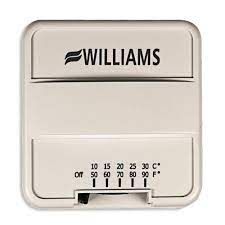
The Williams Furnace P322016 Millivolt Wall Thermostat does not require electricity and works with the millivolt signal produced by the pilot light of the heating system. This detect the temperature of the room and switches on the heater when the temperature is low to ensure that the room is warm. It has a dial control that makes it simple to operate and it is efficient in its function.
Regulates heating operation by providing manual temperature control for a millivolt furnace system. The Williams Furnace P322016 Millivolt Wall Thermostat serves as the wall-mounted control interface used to adjust the desired room temperature setting. Positioned as part of the heating control arrangement, it allows users to manage furnace operation through temperature-based adjustment.
Millivolt Temperature Control:
The thermostat operates by changing the state of the millivolt control circuit based on the difference between the room temperature and the selected setting. When the temperature condition reaches the thermostat’s control point, the switching action communicates the heating demand through the connected circuit. This allows the furnace system to respond according to the thermostat setting.
Control Circuit Connection:
The thermostat provides the connection point between the user temperature setting and the furnace’s millivolt control circuit. Its switching function communicates the heating demand to the connected furnace controls, allowing the heating system to begin or stop operation based on the thermostat position.
Replacement Guidelines:
Replacement of the Williams Furnace P322016 Millivolt Wall Thermostat is necessary when physical damage, cracked or broken housing, worn adjustment controls, electrical deterioration, or other failure conditions affect its intended temperature-control function. Inspect the thermostat, control connections, adjustment mechanism, and related mounting areas for conditions that could affect temperature control or signal operation.
Common Failure Symptoms:
Heating does not respond to thermostat adjustments
Temperature control becomes inconsistent
Thermostat operation becomes intermittent
Furnace cycling does not match the selected setting
Visible damage to the thermostat housing
Equipment Compatibility:
The Williams Furnace heating system should match the specified millivolt wall thermostat design, control arrangement, and applicable manufacturer parts documentation for P322016. Confirm the complete furnace model and existing thermostat configuration to ensure the replacement matches the intended heating control system.
What is the difference between a millivolt thermostat and a standard thermostat?
A millivolt thermostat is designed to control heating equipment that uses a millivolt control system, while other thermostats are designed for different control system types.
How does a wall thermostat control furnace operation?
A wall thermostat controls furnace operation by changing the heating control signal based on the selected temperature setting and room temperature conditions.
What is Williams Furnace P322016 Millivolt Wall Thermostat?
Williams Furnace P322016 Millivolt Wall Thermostat is a wall-mounted temperature control component used for millivolt furnace applications to manage heating operation through the thermostat control circuit.
Why can a thermostat affect furnace heating cycles?
A thermostat controls when the heating demand signal is provided, so problems with thermostat operation can affect how the furnace responds to temperature settings.
What information helps identify the correct wall thermostat?
The furnace model information, existing thermostat details, and manufacturer part information should be reviewed to identify the correct thermostat for the application.